Almost every renovation project in the Denver metro area starts the same way: a homeowner has a plan for the finished kitchen or bathroom, a contractor lined up (or a weekend cleared for DIY work), and very little thought given to where all the old material is actually going to go. Then demo day arrives, and suddenly there is a pile of cabinets, tile, drywall, and flooring sitting in the driveway with nowhere to put it. Renting a dumpster before a renovation starts, rather than scrambling once debris is already stacked up, is one of the simplest ways to keep a project moving on schedule.
This guide walks through the debris that typically comes out of the most common renovation projects around Arvada, Wheat Ridge, Golden, and the rest of the Denver metro area, how to size a dumpster for each, and when to schedule delivery so it is sitting on the property exactly when the demo crew needs it.
What Comes Out of a Kitchen Remodel
Kitchens are usually the heaviest and most mixed-material renovation debris a homeowner will generate. A typical kitchen demo produces old cabinets (wood, particleboard, or a mix of both), countertops (laminate, tile, or in some cases stone), backsplash tile and the thinset or mortar behind it, flooring if it is being replaced at the same time, drywall from any wall changes, and old appliances if they are being hauled rather than donated. Plumbing and electrical scraps often come out too, especially if the layout is changing and lines are being rerouted.
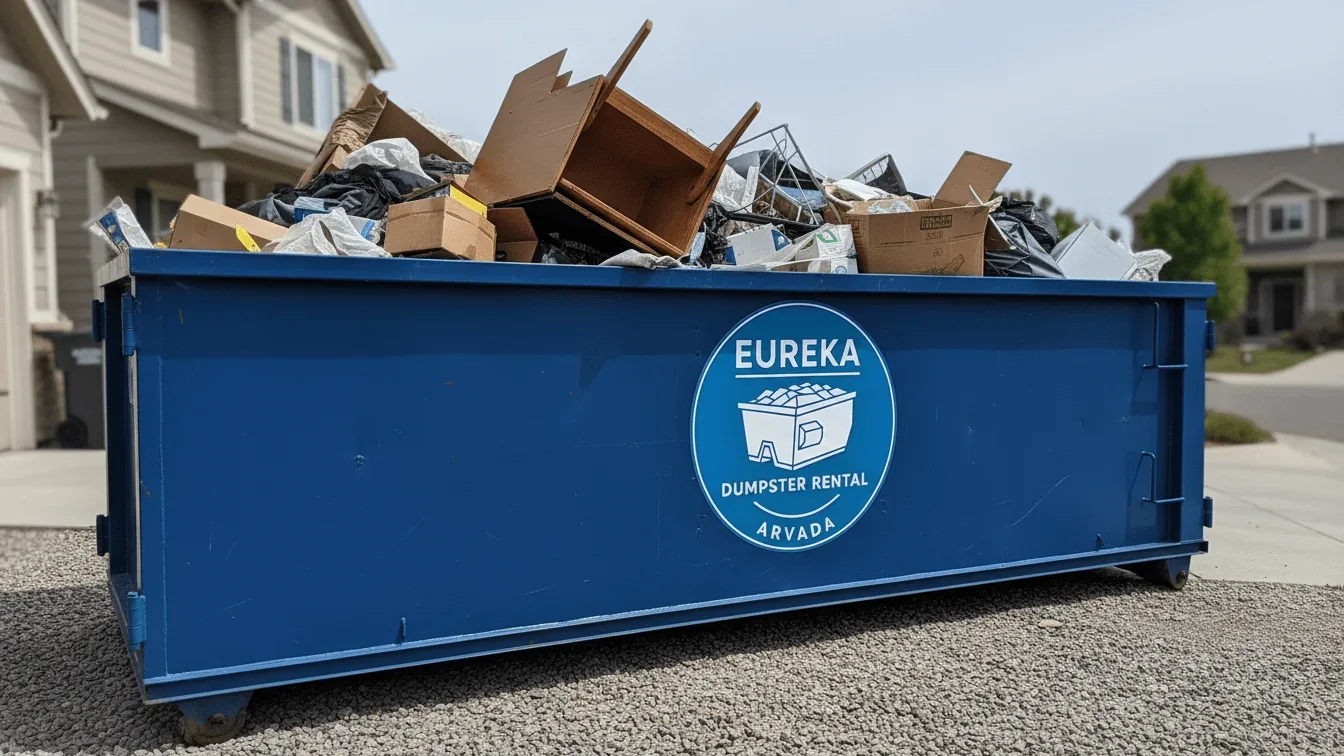
The mix of dense material (tile, countertop offcuts, old cast-iron sinks) with bulky lighter material (cabinet boxes, doors) is exactly the kind of load a dumpster rental is built for. A pickup truck bed fills up fast with cabinets alone, and stone or tile countertop sections are heavy enough that hauling them by hand to a truck, more than once, gets old quickly.
What Comes Out of a Bathroom Remodel
Bathroom projects generate less total volume than a kitchen but can still be surprisingly heavy for their size. Common debris includes the tub or shower surround, tile (floor and wall), the vanity and countertop, toilet, and any subfloor that has water damage and needs to be replaced. Older bathrooms sometimes have a mortar-bed tile floor, which is dense and slow to break up, plus cast-iron tubs that are far heavier than they look.
Because bathroom footprints are small, homeowners sometimes assume the debris volume will be small too. In practice, tile and tub weight often matters more than overall cubic yardage, so it is worth thinking about tonnage as well as size when picking a container.
What Comes Out of a Flooring Replacement
Flooring-only projects are more uniform than a full remodel, but the material still varies by what is coming up. Carpet and pad are bulky but light. Hardwood, tile, and vinyl plank are heavier and denser. If the subfloor is being replaced as well, that adds plywood or OSB panels and sometimes old adhesive residue that was never fully removed from a prior installation. A whole-house flooring job across several rooms can generate more volume than people expect, simply because it is happening room by room over the course of a project rather than all in one afternoon.
What Comes Out of a Whole-Home Renovation
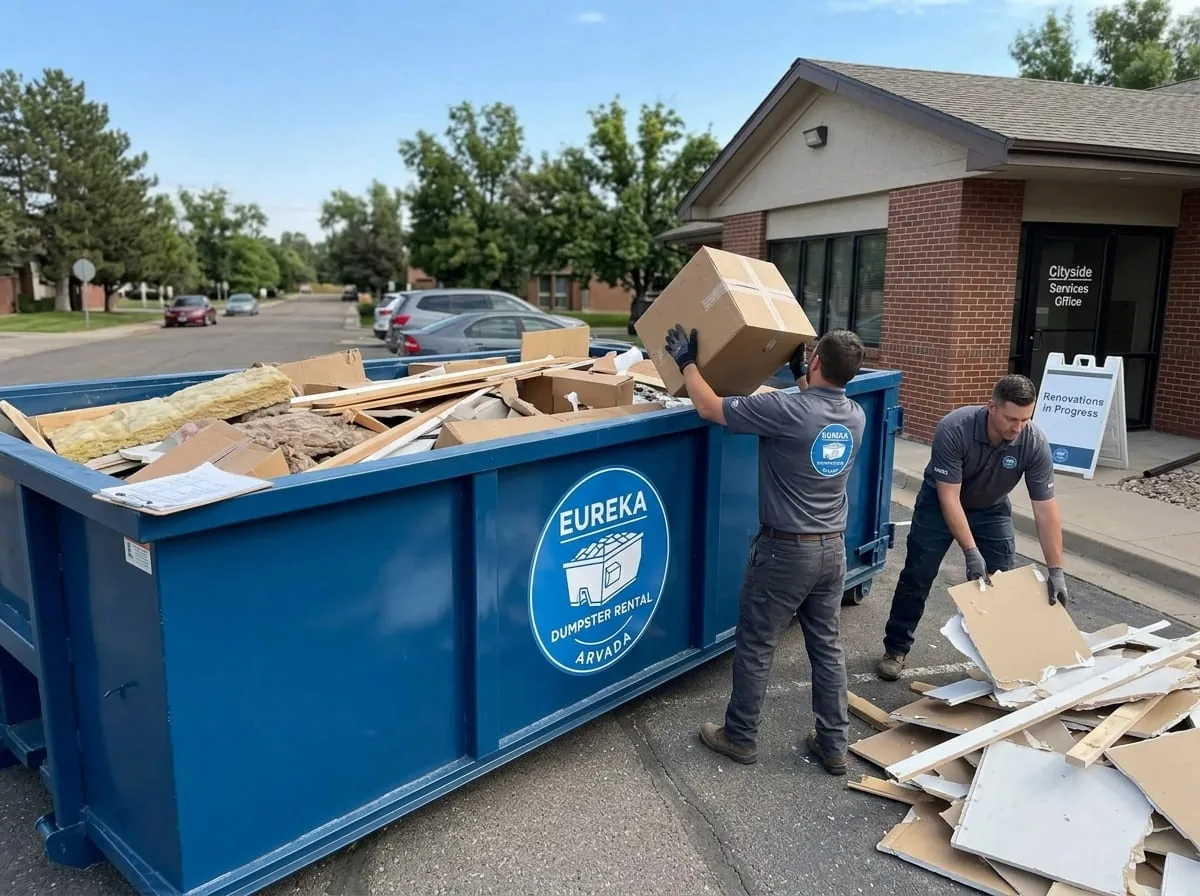
A whole-home renovation combines all of the above and adds general demolition debris: drywall, old insulation, trim and doors, sometimes structural elements if walls are being reconfigured. These projects tend to unfold in phases rather than a single demo day, so debris volume builds up over weeks rather than arriving all at once. Homeowners tackling a full renovation are also more likely to be coordinating with a general contractor who has their own expectations about how debris removal fits into the schedule, which is worth discussing early rather than assuming everyone is on the same page.
Right-Sizing the Dumpster for Each Project
Matching the container to the project keeps costs predictable and avoids the hassle of a second haul. As a general starting point:
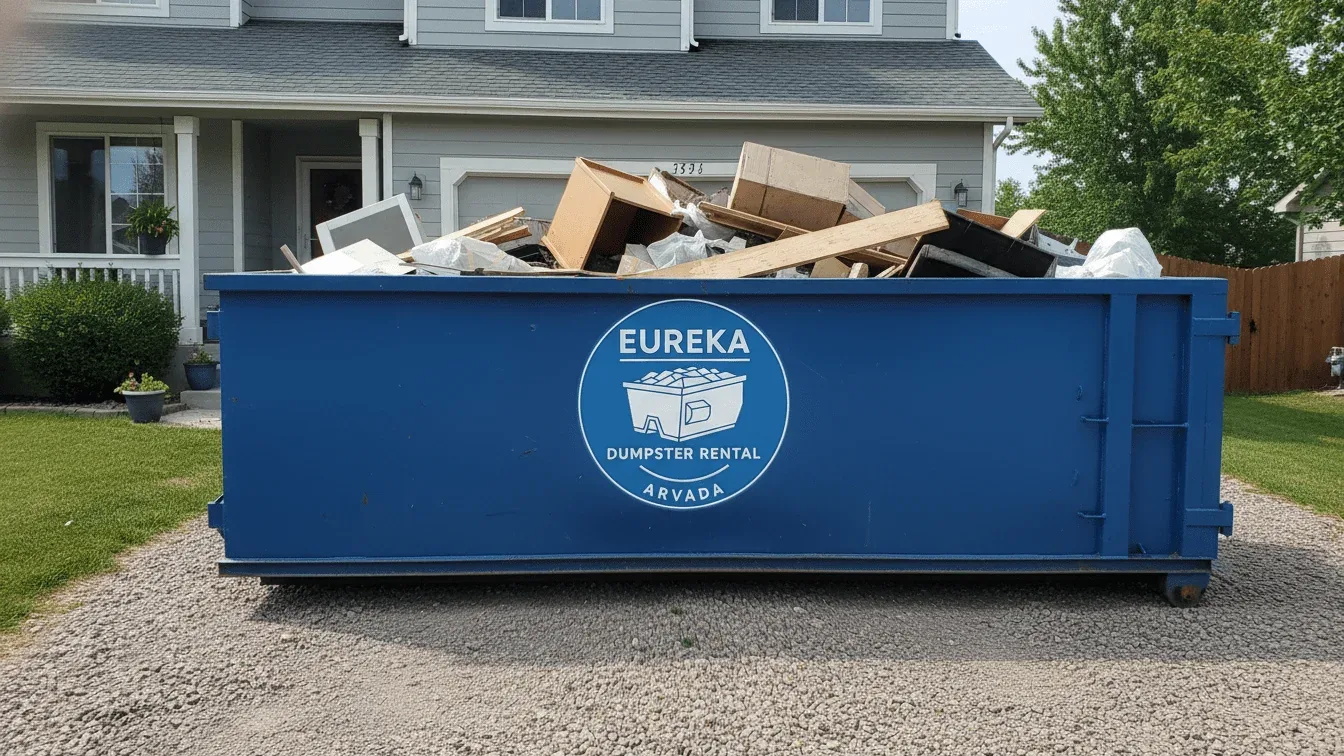
A single bathroom remodel usually fits in a 10 to 15 yard dumpster, depending on whether tile and a full tub surround are coming out along with the vanity and subfloor. A kitchen remodel typically calls for a 15 to 20 yard container, since cabinets and countertops take up real volume even before flooring or drywall are added in. Whole-home renovations, or projects that combine a kitchen, multiple bathrooms, and flooring throughout the house, generally need a 20 to 30 yard dumpster, and larger multi-phase projects can call for something bigger still.
These are starting points, not hard rules. A project that is mostly cosmetic (new paint, new fixtures, cabinets staying in place) will generate far less debris than a full gut job in the same room. When in doubt, it is worth a quick call to talk through what is actually coming out of the house rather than guessing. The full breakdown of container dimensions and weight limits for every size is available on the dumpster sizes page, and residential-specific guidance is on the residential dumpster rental page.
Timing Delivery Around Demo Day, Not the Finishing Phase
One of the most common scheduling mistakes on a renovation is ordering the dumpster too late. The debris volume on a remodel is almost entirely front-loaded: demo day and the days immediately after produce the vast majority of what needs to be hauled away, while the finishing phase (cabinet install, tile setting, paint, trim) produces comparatively little waste.
That means the dumpster needs to be on site and ready before the first cabinet comes off the wall or the first tile gets pried up, not scheduled for whenever it is convenient later in the project. A container that shows up mid-demo means debris sits in a pile, sometimes in a garage or on a lawn, waiting for the dumpster to arrive. A container that shows up after demo is mostly finished means it was ordered too late to be useful for its main job.
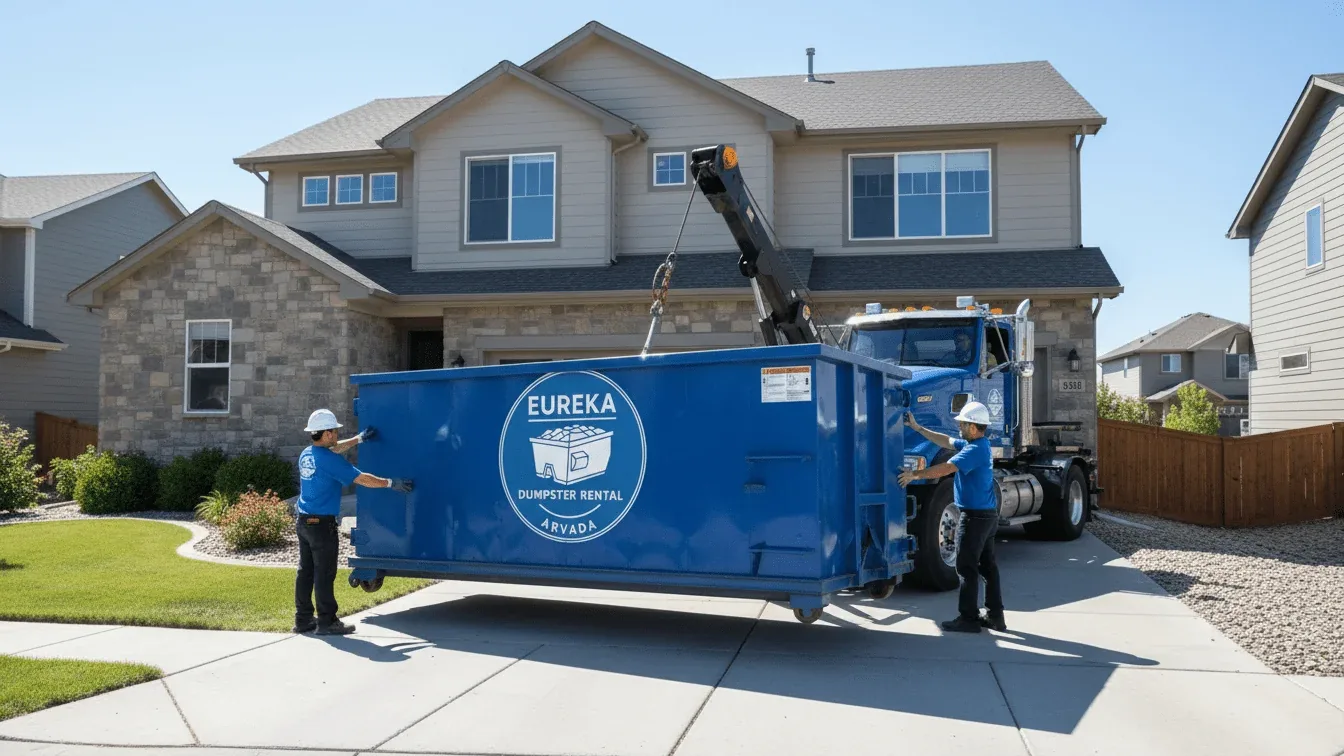
For homeowners managing their own project, this usually means booking delivery for the morning of, or the day before, demo begins. For contractor-led projects, this is a conversation to have during scheduling rather than something to leave until the crew shows up. Projects with a tight timeline, or where the exact demo date keeps shifting, may benefit from construction dumpster rental service built around job-site scheduling rather than a single fixed delivery window.
Older Arvada Homes vs. Newer Subdivisions
Arvada has a wide range of housing stock, from older homes near Olde Town and Ralston Creek to newer construction further west toward Candelas and Leyden Rock, and that age difference can affect what actually comes out during a demo. Older homes are more likely to have plaster-and-lath walls instead of drywall, which demos differently and tends to be heavier and messier than removing drywall sheets. Older electrical and plumbing runs sometimes get replaced as part of a renovation, adding wire, conduit, and old pipe to the debris pile. Flooring in older homes can also hide layers: it is not unusual to find more than one old flooring material stacked on top of each other from prior renovations.
Homes built before 1980 may also contain asbestos-containing materials in old flooring, popcorn ceiling texture, or pipe insulation. This is worth taking seriously rather than guessing about, particularly during demo of an older bathroom or kitchen. Colorado's environmental health agency regulates asbestos identification and abatement, and homeowners working on an older property who are unsure what they are dealing with should have suspect material tested before demo rather than after. More information is available through the Colorado Department of Public Health and Environment.
Newer subdivisions generally present fewer surprises during demo, since the materials involved are more current and better documented, but they are not immune to the same volume considerations. A kitchen remodel in a newer west-Arvada home still produces the same cabinets, countertops, and tile debris as one in an older neighborhood; the main difference tends to be what else turns up alongside it once the walls open up.
DIY vs. Contractor-Coordinated Dumpster Rental
Who actually orders the dumpster, and when, tends to depend on how the project is being run. On a homeowner-managed DIY renovation, the homeowner is usually the one scheduling delivery, and the main thing to get right is timing it to demo day and picking a size that will not need a mid-project swap. It also helps to think through placement ahead of time: a dumpster parked entirely on a private driveway does not require a city permit in Arvada, but placement in the street or a public right-of-way does, along with rules about distance from corners, driveways, and fire hydrants. Details are available directly from the City of Arvada's dumpster permit page.
On a contractor-led project, debris removal is often folded into the overall schedule the contractor is already managing, but it is still worth confirming directly who is responsible for ordering the dumpster, what size they are planning on, and whether the delivery date lines up with the actual demo start rather than a general project start date. Miscommunication here is one of the more common (and avoidable) causes of debris piling up on a job site.
Either way, a quick conversation ahead of time makes the difference between a dumpster that is ready when the sledgehammers come out and one that shows up after the mess is already made. For help sizing a container for a specific renovation scope in Arvada or anywhere in the Denver metro area, contact Eureka Dumpster Rental directly to talk through the project.