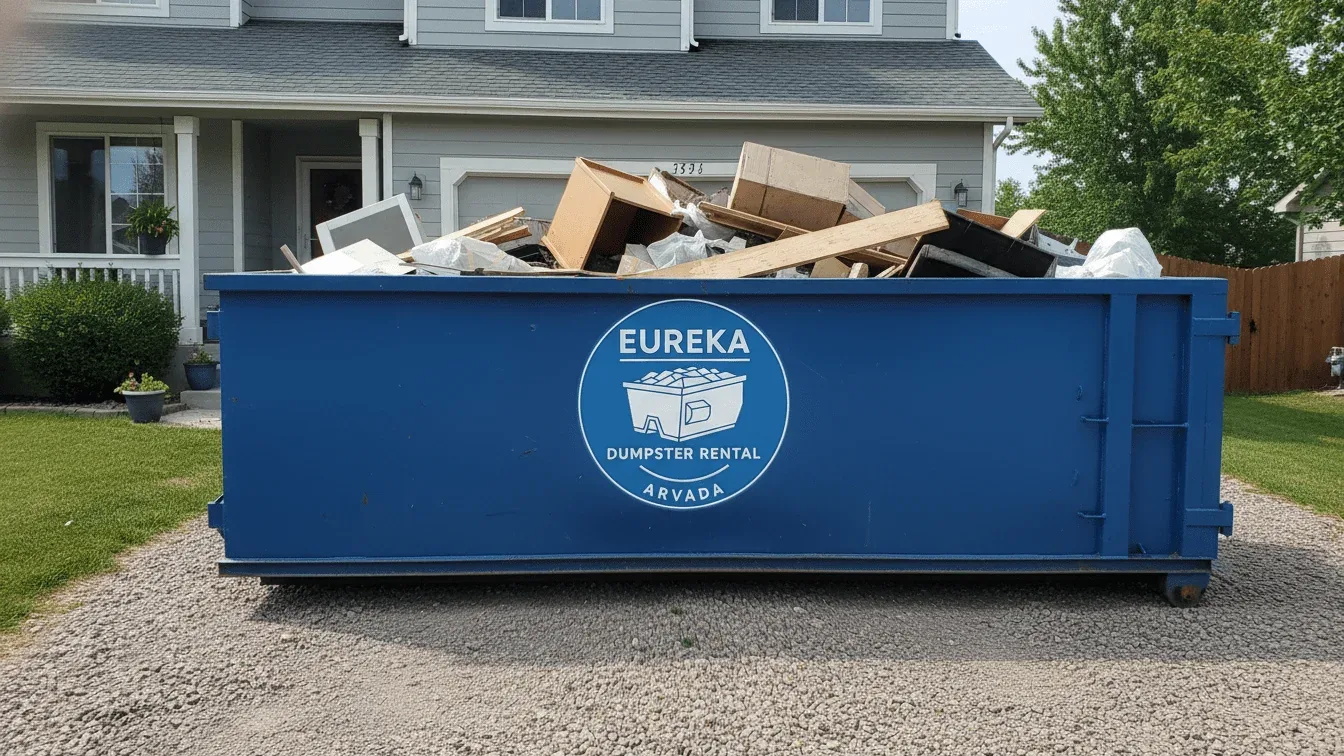
Most homeowners planning a dumpster rental in Arvada think about size and rental length first, and placement as an afterthought. That order should be reversed. Where the container sits, and how it gets there, affects whether your driveway comes through the project undamaged, whether the delivery truck can maneuver safely, and whether you need a city permit at all. A little planning before the truck shows up saves a lot of frustration afterward.
Why Placement Matters More Than People Expect
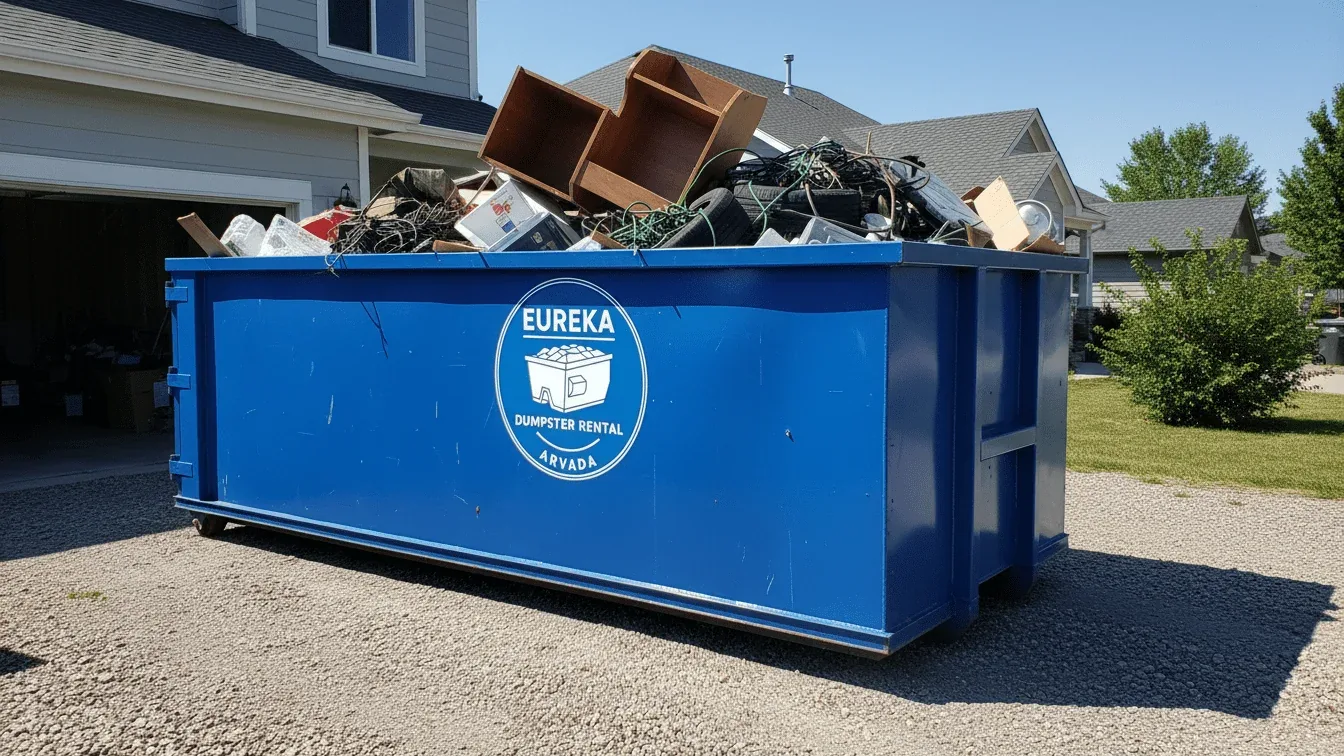
A roll-off dumpster is not a light object even before you fill it. The empty container itself weighs well over a thousand pounds, and once it is loaded with construction debris, shingles, or remodel waste, the combined weight can run into several tons concentrated on a relatively small footprint. That weight is not evenly distributed either — the steel rails and rear rollers that the container rides and drops on carry a disproportionate share of the load, especially during delivery and pickup when the truck's hydraulic arm is sliding the box on or off.
In the Denver metro area, that load lands on driveways that have already been through a lot. Colorado's freeze-thaw cycle — warm days followed by hard overnight freezes, repeated dozens of times each winter and shoulder season — is one of the more aggressive climate patterns for concrete and asphalt anywhere in the country. Water works its way into hairline cracks, freezes, expands, and widens the crack a little more each cycle. A driveway that looks fine in July can have weak spots that were quietly forming since February. Set a loaded 20 or 30 yard dumpster right on top of one of those weak spots and you can turn a hairline crack into a real one, or a settled slab into a cracked one.
None of this means you should avoid driveway placement. In most cases it is still the easiest and safest option. It just means placement deserves a five-minute walk-through before delivery day.
Protecting Your Driveway
The single most effective step is putting down protection under the delivery point before the truck arrives. Two or three sheets of 3/4-inch plywood, laid where the container's rails and rollers will make contact, spread the point load across a much wider area and cushion the scrape and drop of delivery. This is standard practice for any driver who has been doing this for a while, and it is worth asking about when you book — some companies bring boards as a matter of course, others expect the homeowner to provide them for a driveway they want protected.
Beyond boards, take a look at the driveway itself. Walk the section where the container will sit and look for cracks wider than a hairline, areas where the slab has settled or heaved unevenly, or a section of asphalt that already looks soft or alligatored. If you spot a weak section, it is worth shifting the container a few feet toward a sounder part of the driveway, or toward the street-facing end where the concrete tends to be thicker and better supported than sections closer to a garage slab. Older driveways in established Arvada neighborhoods near Olde Town and Ralston Creek, where slabs have had decades of freeze-thaw exposure, are more likely to have a soft spot than a driveway poured in the last few years out in newer west-Arvada subdivisions like Candelas or Leyden Rock — but age is not a guarantee either way, so it is worth a look regardless of when the driveway was poured.
If your driveway has a slope, ask that the container be placed on the flattest available section. A dumpster sitting at an angle concentrates weight on the downhill corner and can also make loading debris into it less stable.
Driveway vs. Street Placement: What Arvada Actually Requires
For most residential projects, placing the dumpster entirely on private property — your driveway or, if it fits, inside a garage apron — is the simplest path, and it comes with a specific advantage: the City of Arvada does not require a permit when a container sits entirely on private property. If you have driveway room, this is generally the fastest and least complicated option.
Placement changes if there is no room on your property and the container needs to sit in the street or a city easement instead. Arvada's confirmed rule is that any dumpster or container placed in the public right-of-way requires a right-of-way permit, applied for online through Arvada Permits by the company that owns the container, which must hold a Municipal General Contractor license. The maximum container size allowed in the right-of-way is 40 yards, and it must be leak-proof, marked with reflective tape and the company's name, with the permit taped in a waterproof sleeve on each end. Placement rules require the container to sit at least 35 feet from a corner and at least 5 feet from a driveway, and it cannot block a fire hydrant, storm drain, manhole, or a neighbor's access. Permits are good for 30 calendar days without a building permit on file, or 120 days if you have an issued city building permit, with one 30-day extension available on request. Questions about right-of-way placement can be directed to Arvada's Engineering Services line at 720-898-7640, and full details are published on the City of Arvada's dumpster permit page.
The practical takeaway: if your project can stay entirely on your own driveway, you skip the permit process altogether. If it can't, budget a little extra lead time for the right-of-way permit before the delivery date.
Clearance for the Delivery Truck
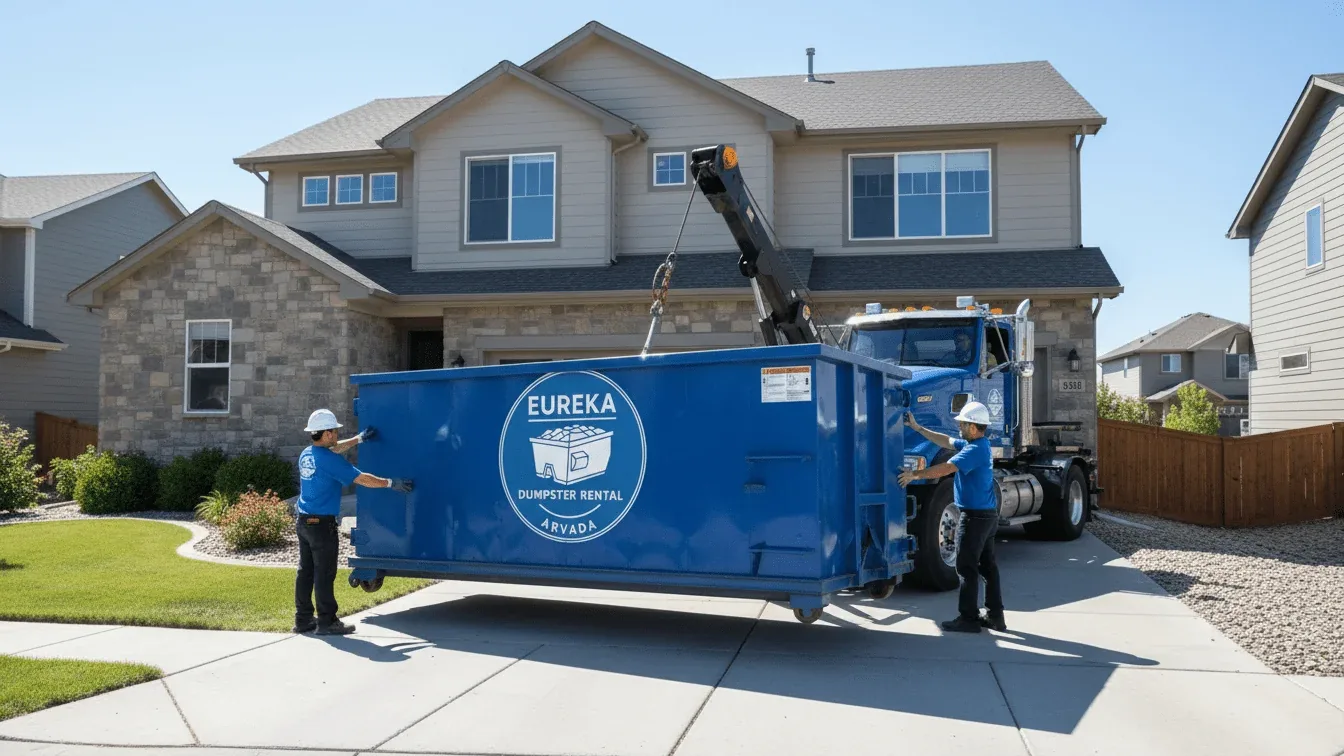
A roll-off delivery truck is a large vehicle with specific space needs, both for the approach and for the drop itself. Before delivery day, look up at anything the truck or the raised container bed might contact: overhead utility lines running from the street to the house, low tree branches over the driveway approach, and the clearance of your garage door if the container needs to sit close to it. The truck bed tilts upward during delivery and pickup, and a container riding on the rails needs vertical clearance above the delivery point, not just at ground level.
Turning radius matters just as much as overhead clearance. These trucks are long and need a relatively straight, wide approach to back into a driveway without jackknifing or clipping a mailbox, fence, or parked car. If your driveway has a tight turn from the street, curves around a landscaped island, or is narrowed by parked vehicles on the street, mention that when you book so the driver knows what to expect and can plan the approach, or so you can move vehicles out of the way ahead of time.
No Good Driveway Spot? Here Are Your Options
Not every property has a driveway that works — some are too short for a 20 or 30 yard container plus truck clearance, some are shared, and some slope too steeply for safe placement. Foothills-edge properties around Golden and Morrison in particular tend to have steeper lots and less flat driveway space than the flatter east side of the service area, which makes this more common there.
If your driveway genuinely will not work, the alternatives are a street or right-of-way placement (which brings in the Arvada permit process described above), a spot on a side yard or gravel pad if the surface can support the weight and the truck can reach it, or in some cases a neighbor's driveway with their permission. Whichever alternate spot you consider, run it past whoever is delivering the container before the day of drop-off — not every surface or angle is safe for a loaded roll-off, and a quick phone conversation ahead of time avoids a wasted trip.
If you are not sure which option fits your property, it is worth a call before you book. Our dumpster rental services team fields these placement questions regularly for homes throughout the Denver metro area, and can usually tell you over the phone whether your driveway will work as-is, whether you should plan for street placement, or whether protective boards are worth arranging ahead of delivery.
Planning Ahead Makes the Whole Rental Easier
Placement is one of the few parts of a dumpster rental that is entirely within your control before the truck ever shows up. A five-minute walk of your driveway, a look overhead for wires and branches, and a plan for where the container will actually sit go a long way toward a smooth delivery and a driveway that looks the same after the rental as it did before. If your project is in Arvada or anywhere in our Arvada service area, give us a call and we will help you sort out the right placement before delivery day. You can also browse our frequently asked questions for more on how rentals typically work, or reach our team directly through the contact page.