One question comes up on almost every delivery call: "Do I need a permit for this?" The honest answer depends entirely on where the dumpster sits, not on which city you happen to live in. Every city in the Denver metro area draws the same basic line - a dumpster placed entirely on private property, like a driveway, garage pad, or side yard, almost never requires a permit anywhere. The moment a container has to sit in the street, an alley, or any part of the public right-of-way, a permit becomes necessary in nearly every jurisdiction we serve, and the process, fees, and paperwork differ from one city hall to the next.
That patchwork is the whole reason this guide exists. Eureka Dumpster Rental delivers across 16 Denver-metro cities out of our Arvada yard, and the right-of-way rules genuinely are not the same in Golden as in Wheat Ridge, or in Broomfield as in Thornton. Below is what we know for certain about each city, starting with Arvada's own confirmed rule, then the rest of the service area grouped by drive time from Olde Town Arvada. Where a city has not published a clear, specific dumpster policy we could independently verify, we say so plainly rather than guess - call that city's public works or engineering office before planning a street placement.
Arvada: The Confirmed Rule
Because our yard is at 5460 Union in Arvada, this is the rule we work with every single day, and it is worth stating exactly as the City of Arvada publishes it. No permit is required for a dumpster placed entirely on private property - a driveway or garage pad. A right-of-way permit is required for any dumpster or container placed in the public right-of-way or a city easement, meaning a street or alley. That permit is applied for online through Arvada Permits, and it has to be filed by the company that owns the container, which must hold a Municipal General Contractor license with the city.
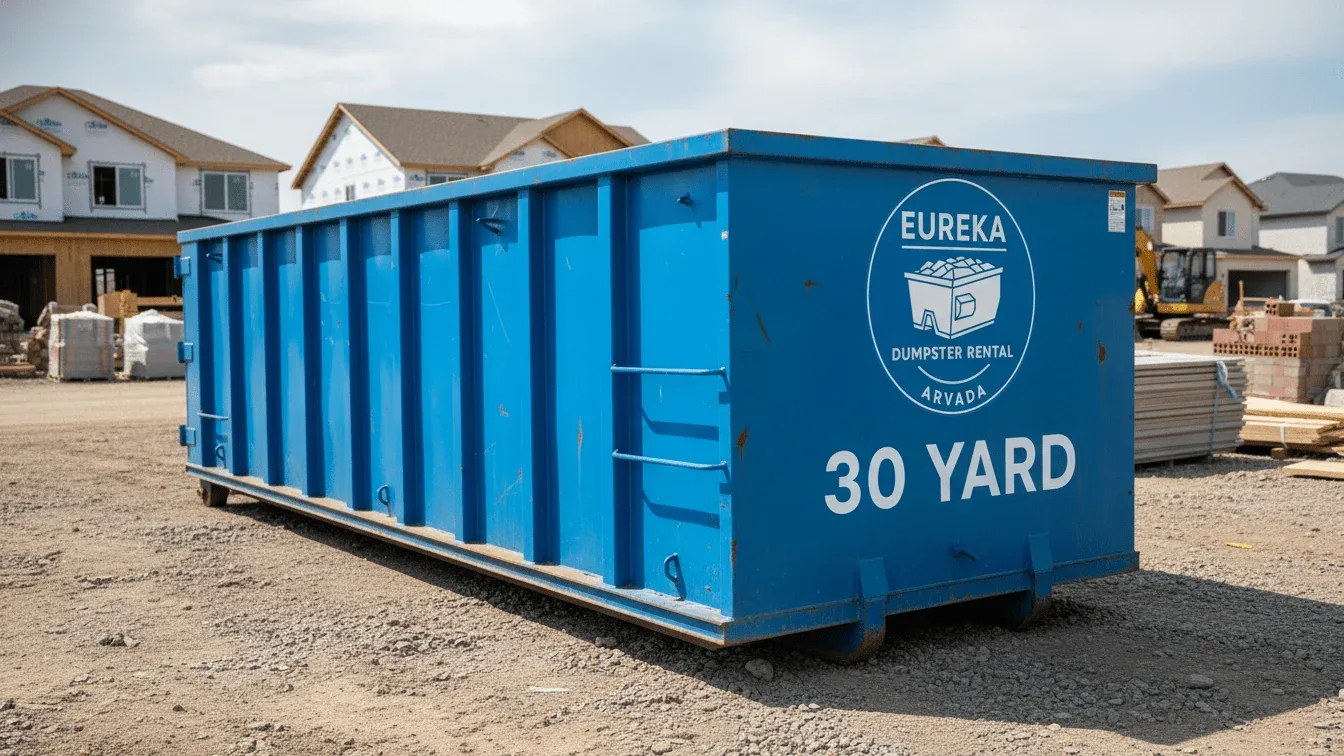
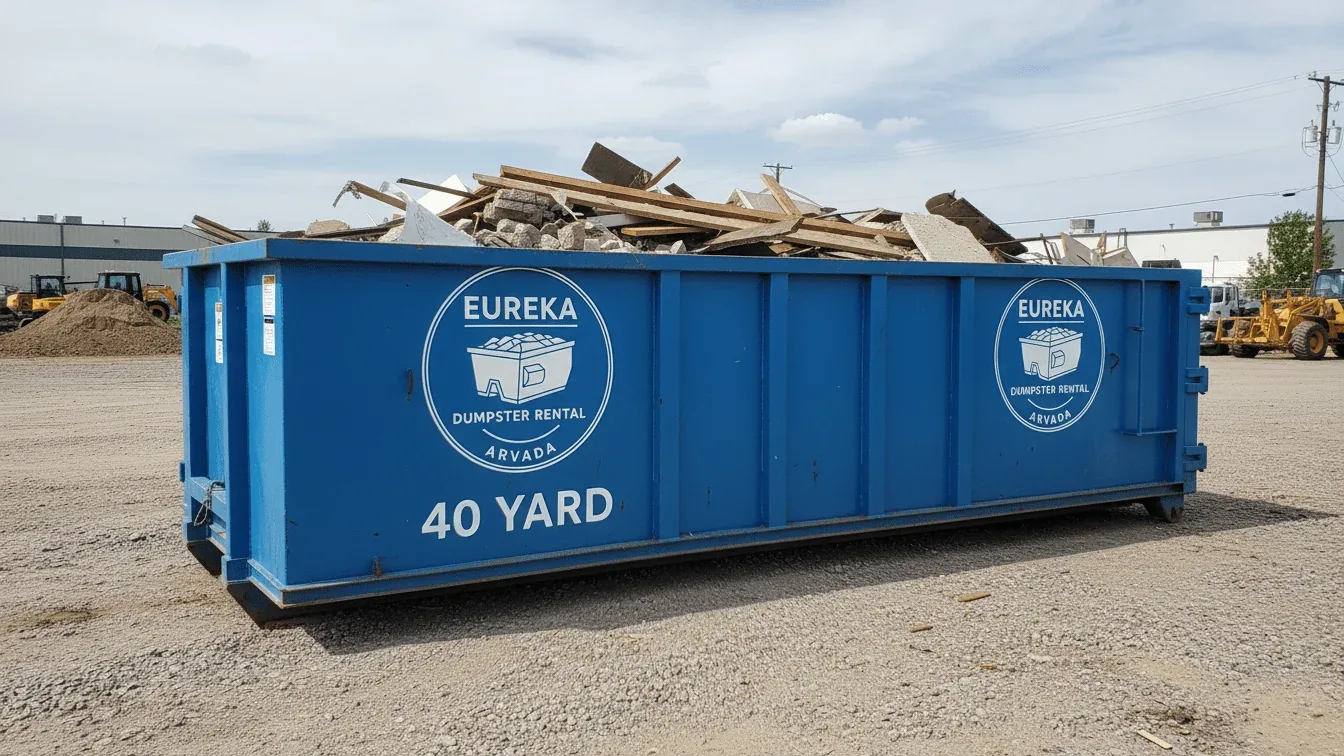
Arvada also spells out the physical rules for a street-placed container: the maximum size allowed in the right-of-way is 40 yards, the container has to be leak-proof, marked with reflective tape and the company's name, and the permit itself has to be taped in a waterproof sleeve on each end of the box. Placement has to keep the container at least 35 feet from a corner and at least 5 feet from a driveway, and it cannot block a fire hydrant, storm drain, manhole, or a neighbor's access. A permit is good for 30 calendar days without an active building permit on file, or 120 days if you already have an issued city building permit, and one 30-day extension is available on request. Questions on any of this go to Arvada's Engineering Services division at 720-898-7640, or you can review the full policy directly on the City of Arvada's dumpster permit page.
Most Arvada jobs have a driveway wide enough for a 10 to 30 yard container, so the large majority of our deliveries never touch this process - we place the box on private property and skip the permit conversation. It mainly comes up on tight in-fill lots near Olde Town and Ralston Creek, or job sites where the driveway is already full of equipment or materials.
Arvada's Closest Neighbors: Wheat Ridge, Westminster, Golden, Lakewood, and Edgewater
Wheat Ridge treats right-of-way placement as a licensing issue as much as a permitting one. Staging or storing materials, equipment, storage containers, or trash receptacles in the city's right-of-way falls under the city's Municipal Contractor License framework, and a contractor generally needs that license class before the city will approve street placement, along with a traffic control plan for the block. Private-property placement is not addressed by that requirement - a driveway or yard placement is between you and your own property. Questions go to Wheat Ridge Public Works at 303-234-5900.
Westminster, which straddles both Jefferson and Adams counties, publishes its own right-of-way permitting process through its public works department for anything placed in a city street or easement, separate from a standard building permit. As with every city here, driveway placement sits outside that requirement. Confirm current fees and timelines directly with Westminster's permits office before planning a street delivery.
Golden requires a right-of-way permit for any dumpster or roll-off placed in a city street, applied for through the city's online Accela permitting portal under Public Works, and the application has to include a traffic control plan that meets MUTCD standards along with "No Parking" signage posted at least 24 hours before the container arrives. Fees are calculated per application rather than a flat rate. You can start that process or ask questions through the City of Golden's right-of-way permit page, or reach the Building Department at 303-277-8702. Golden's foothills-edge lots also tend to run steeper and narrower than the flatter east side of the metro, which is worth mentioning to our dispatcher when you book - it sometimes changes where on the property a container can actually sit.
Lakewood issues public-way permits through its Public Works department for work and placements in the right-of-way, though its published permit materials focus mainly on utility and excavation work rather than spelling out a dumpster-specific process the way Arvada or Golden do. Treat street placement in Lakewood as something that needs sign-off first, and call Lakewood Public Works at 303-987-7500 to confirm the current process for a temporary container.
Edgewater is a small, dense city where most lots have limited driveway space, and the city maintains its own right-of-way resources and permitting through public works for anything placed off private property. Given how tight many Edgewater driveways are, it is worth flagging this with our dispatch team before delivery day so we can tell you in advance whether your address is likely to need a street placement.
North Jeffco and the Broomfield Corridor: Broomfield, Superior, Louisville, Northglenn, Federal Heights, and Thornton
Broomfield has one of the more clearly published policies in the metro, which makes it easy to be specific. Private-property placement needs no permit. A permit is required whenever a dumpster or storage container sits on the street for more than 24 hours, capped at 160 square feet and 8 feet of width, with standard clearance distances from intersections, driveways, and fire hydrants. A permit runs up to 30 days without an active building permit, or up to 180 days with one - noticeably longer than Arvada's 120-day ceiling. Applications go through Broomfield's Engineering Division at 303-438-6380 or engineeringpermits@broomfield.org; more detail is on Broomfield's engineering forms and permits page. This corridor, along the US-36 tech and office belt through Broomfield, Superior, and Louisville, sees a steady mix of office build-out and residential remodel debris, so the permit question comes up often where a lot or street is the only realistic drop point.
Superior and Louisville, both in Boulder County just north of Broomfield, are smaller municipalities where we could not independently verify a dumpster-specific published fee or process in the same detail as Broomfield's. Both towns handle general right-of-way work through their own public works or engineering divisions, so confirm current requirements with each town's office before planning a street placement.
Northglenn and Federal Heights, on the Adams County side of the corridor, each route right-of-way placement through their public works departments as part of standard street-use permitting, consistent with the pattern everywhere else in this guide, though we could not confirm a published dumpster-specific fee schedule for either city - call ahead if your job will need the street.
Thornton publishes its own infrastructure right-of-way permit process through its Engineering Services division, covering the kinds of temporary placements a roll-off delivery would fall under. Confirm current fees and duration limits directly with Thornton before a street delivery, since we could not verify a dumpster-specific fee sheet independently.
Denver, as the largest jurisdiction we deliver into, requires a right-of-way permit for dumpsters, roll-offs, and other containers placed in the public way, administered through the Department of Transportation and Infrastructure. The party placing the container - in practice, the dumpster company - is the one who applies, and Denver offers both a residential annual permit and a one-time permit depending on the job. General information is available through Denver DOTI's right-of-way permits page. Given Denver's size, exact size limits and fees vary by permit type, so we confirm specifics with DOTI before a street placement on a Denver job rather than assuming Arvada's numbers carry over.
Morrison, tucked against the foothills, maintains its own work-in-public-right-of-way permit through Town Hall, and the same steep-lot, narrow-access considerations that apply in Golden show up here too - grade and driveway width often decide the placement question before permitting even comes up. Contact Morrison's Town Hall to confirm current requirements for a specific address.
Lakeside is a very small incorporated town in Jefferson County, and we were unable to locate a published, dumpster-specific right-of-way policy for it online. Given the town's size, the safest approach is to call Lakeside's town offices before planning any placement that is not entirely on private property.
Commerce City, in Adams County, handles right-of-way and construction-related permitting through its development and public works functions, but we did not find a dumpster-specific fee schedule published separately from its general construction permit process. Confirm directly with the city before a street placement, and default to a driveway or private-property drop whenever the lot allows it.
Quick-Reference Table
A note on Jefferson County itself: if your job sits in unincorporated county land rather than inside a city, the county runs its own right-of-way use and construction permit for temporary container placement, separate from any city's process. That is worth knowing because Arvada, like several cities here, spans a boundary - mostly Jefferson County with a small sliver in Adams County - so which rules apply can depend on the exact parcel, not just the mailing address. Jefferson County's Transportation and Engineering Division can confirm which process applies to a specific unincorporated address.
What to Do Before You Call for Delivery
The single biggest thing you can do to avoid this entire conversation is put the container on private property. A driveway, a cleared side yard, or a parking pad works in every one of the 16 cities above without triggering any permit process, and it is where most of our residential and commercial jobs land regardless of city. When a driveway genuinely will not work - a narrow in-fill lot, a home with no driveway, a commercial site where the lot is already full of equipment - that is when the city-by-city differences above start to matter, and it is worth raising it with us before delivery day rather than after a container is already sitting in the street.
Eureka Dumpster Rental delivers across all 16 of these cities out of our Arvada yard, and when a job genuinely needs a right-of-way placement, we can talk through what the destination city requires as part of booking your dumpster rental. If you are working a job in Arvada or Golden specifically, our Arvada dumpster rental and Golden dumpster rental pages cover what local delivery looks like in more detail. For anything permit-related on a specific address, the fastest path is a phone call - contact our team and we will help you figure out whether your job even needs to have this conversation at all.