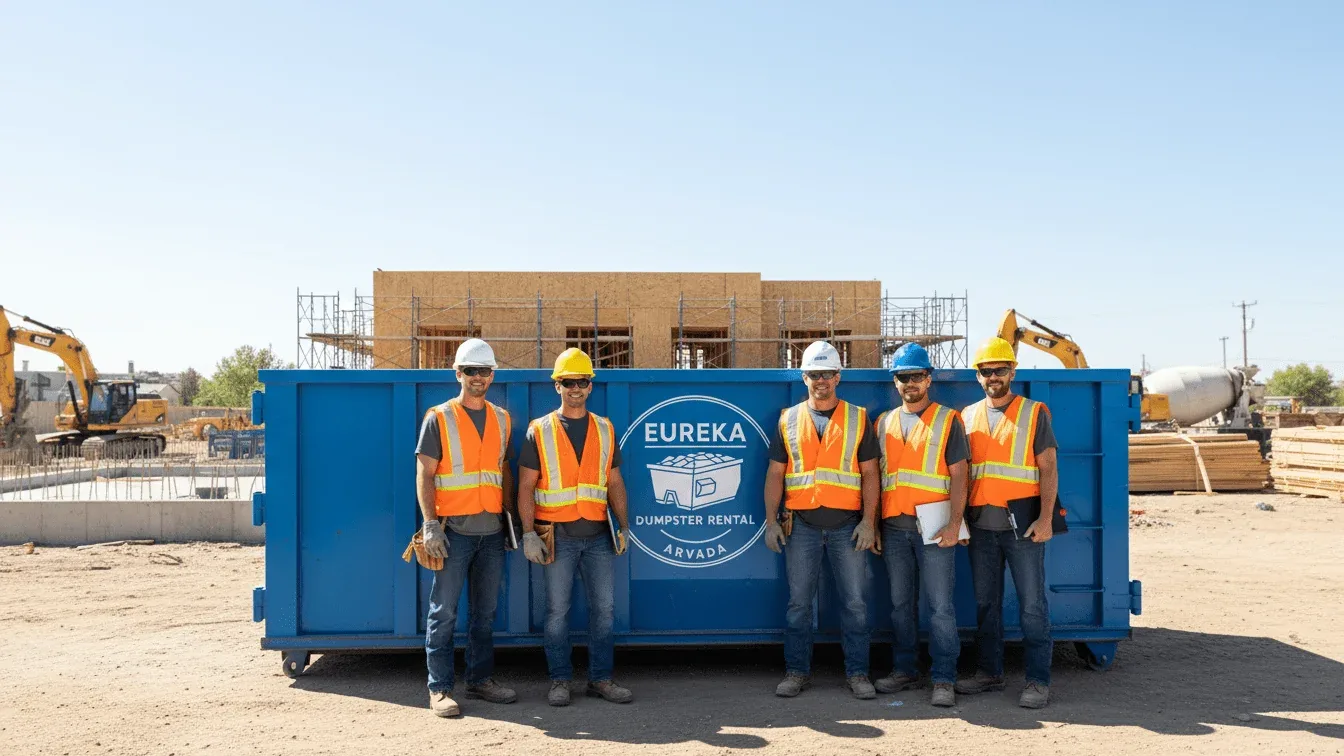
Drive west out past Olde Town Arvada toward Candelas and Leyden Rock on any given Saturday and you will see the same thing repeated on lot after lot: framing crews, roofers, and finish carpenters all working different houses at different stages within the same few blocks. New-construction subdivisions on Arvada's west side are still filling in, and each phase of a build produces a different kind of debris in a different volume. Getting the dumpster side of the job right — the size, the swap schedule, and where the container actually sits on the lot — is a bigger part of staying on budget and on schedule than most superintendents plan for until the first can overflows two weeks into framing.
This guide walks through how debris changes across a typical new-home build in Arvada's growing west-side subdivisions and the corridor around US-36, and how to plan dumpster service so it matches the job instead of fighting it.
The Debris Changes With Every Phase of the Build
A new-home construction site does not generate one steady stream of trash — it generates several distinct waste streams, each tied to a phase of the build, and each with its own weight and volume profile.
Site work and foundation prep come first, generating relatively little debris beyond packaging, form lumber offcuts, and the occasional broken concrete chunk from a footing pour. Framing is next, and it is where volume jumps fast: dimensional lumber trim ends, sheathing scraps, and truss packaging pile up quickly and are bulky but comparatively light. Once the shell is closed in, drywall arrives, and drywall is a different animal entirely — it is dense and heavy for its size, so a can that looked half-empty by volume can already be near its tonnage limit. Interior finish work brings a mix of flooring, cabinet, and fixture packaging, along with paint cans and trim offcuts. Roofing, whether it happens mid-build or gets scheduled around a weather window, drops a concentrated load of shingle and underlayment tear-off or new-install scrap that is among the heaviest material on the whole job. Finally, final cleanout sweeps up everything left behind — protective floor coverings, leftover packaging, minor punch-list debris — before the house is ready to show.
Because framing debris is bulky-but-light and drywall or roofing debris is dense-but-compact, matching container size to the phase actually in progress — rather than ordering one size for the whole job and hoping — is what keeps a builder from paying for wasted volume in one phase and getting hit with overweight charges in another.
Right-Sizing a Dumpster for a New-Build Lot
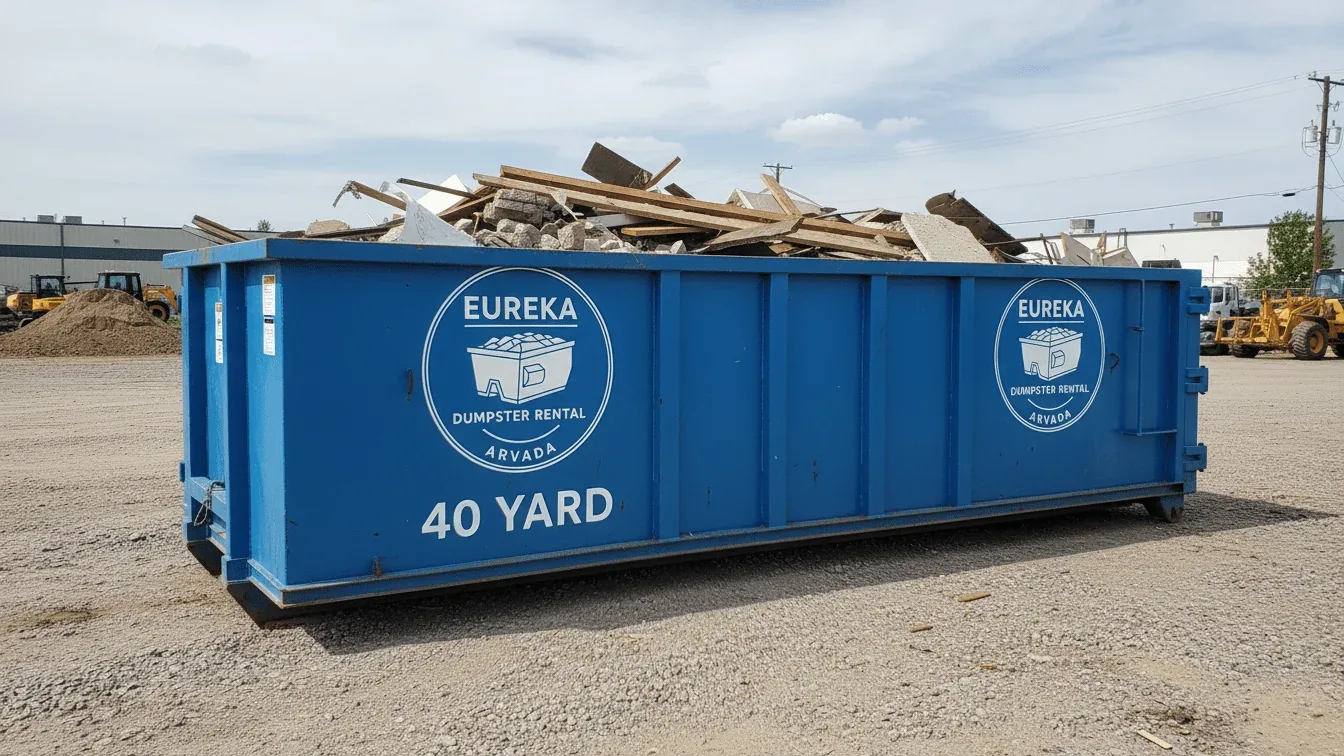
Most single-family new-construction jobs in the Denver metro land in the construction dumpster rental range of 30 or 40 yards, and for good reason. A 30-yard container runs about 22 feet long by 7.5 feet wide by 6 feet high and holds roughly 4-5 tons, which comfortably absorbs a framing phase or a mixed finish-out load without needing a mid-phase swap. A 40-yard container is the same footprint but 8 feet high, holding roughly 5-6 tons — the size most builders reach for during a heavy roofing tear-off or a full-house demo where weight, not just volume, is the limiting factor.
Smaller containers still have a place on a new-build site even when a 30 or 40 is the workhorse. A 20-yard can (about 22 feet by 7.5 feet by 4.5 feet, 3-4 tons included) is a reasonable fit for a narrower lot during finish-out when volume has dropped off, and a 10 or 15-yard can is sometimes brought in for a detached garage, an accessory structure, or a punch-list cleanup where a full-size roll-off would just sit mostly empty. The full breakdown of dimensions and included tonnage for every size is on the dumpster sizes page, and it's worth reviewing against your actual phase-by-phase debris estimate rather than defaulting to whatever size was used on the last job — lot access and material mix both shift the right call.
Scheduling Swaps and Pulls Across the Build Timeline
A single-family new build rarely runs on one dumpster from slab to closing. Most jobs work better with a planned sequence: an initial container for site prep and foundation debris, a swap once framing debris peaks, another around drywall hang and finish, and a final pull or exchange for roofing and cleanout. Trying to stretch one can across the entire timeline usually means either paying for a bigger box than most phases need, or calling for an emergency pull when framing crews run out of room to stack material by Thursday afternoon.
The scheduling piece that catches builders off guard is less about the swap itself and more about lead time. Subcontractor crews move fast once they're scheduled, and a can that's full on a Tuesday but not swapped until Friday can shut down a trade's staging area or force material to get stacked in a way that blocks equipment access. Coordinating pull and swap dates against the sub schedule — not just calling when the can looks full — keeps the yard usable for whichever crew is on site that week. On multi-lot builds in subdivisions like Candelas or Leyden Rock, staggering swap dates across a handful of active lots with the same hauler also tends to get more reliable service windows than calling in one-off requests lot by lot.
Jobsite Placement: HOA Rules, Driveways, and the Right-of-Way
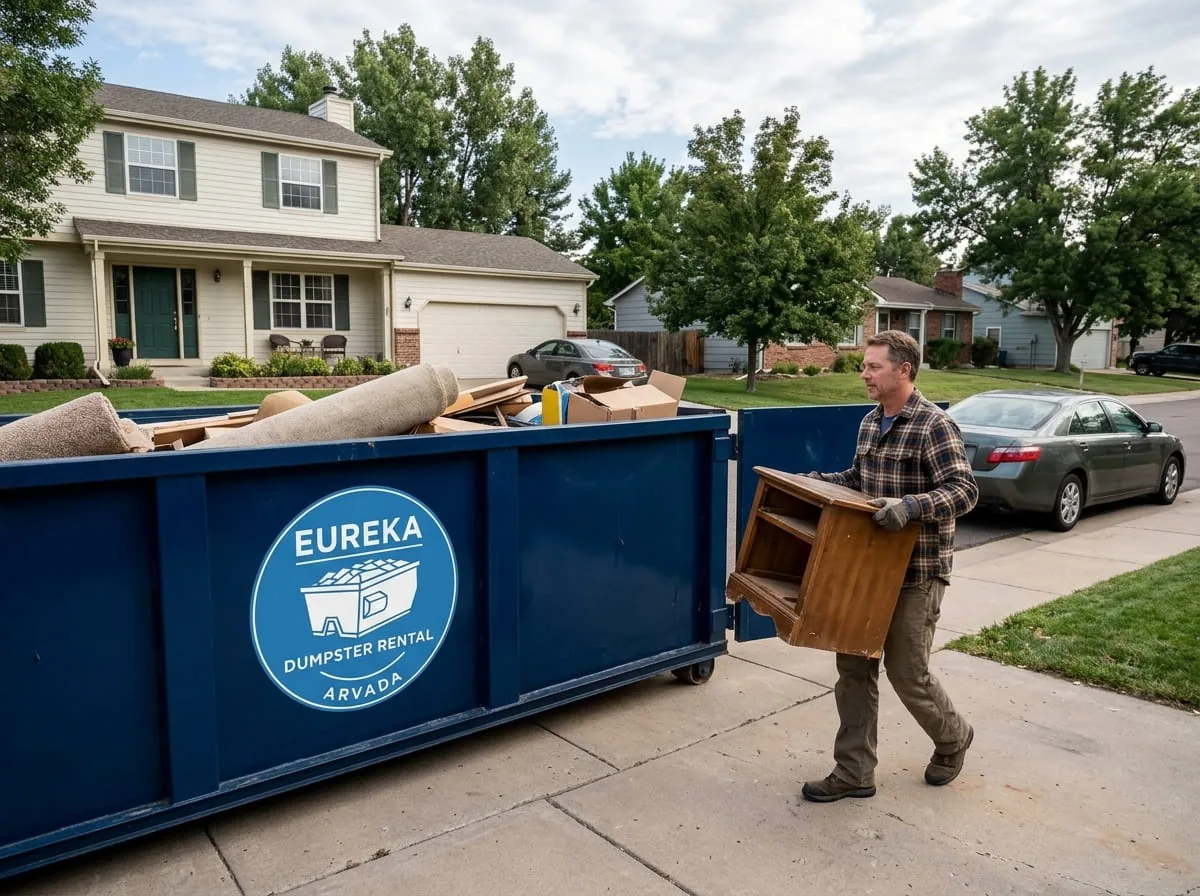
Placement matters as much as size on an active subdivision lot. Most new-build HOAs and site supervisors in west Arvada's newer developments have their own rules about where a container can sit relative to the street, sidewalk, and neighboring lots during construction — check the builder's site-management plan or the HOA's construction guidelines before the first container drops, since those rules are often stricter than city code and get enforced separately from any municipal permit.
On the municipal side, the City of Arvada's rule is straightforward and worth knowing before a container ever gets placed. No permit is required for a dumpster placed entirely on private property — meaning the driveway or the building pad itself. A right-of-way permit is required, however, for any container placed in the public right-of-way or a city easement, such as the street or an alley. That permit is applied for online through Arvada Permits by the company that owns the container, and the container must be leak-proof, marked with reflective tape and the company name, with the permit itself taped in a waterproof sleeve on each end. The maximum size allowed in the right-of-way is 40 yards, and placement has to stay at least 35 feet from a corner and at least 5 feet from a driveway, without blocking fire hydrants, storm drains, manholes, or a neighbor's access. Permits run 30 calendar days without a building permit on file, or 120 days when there's an active city building permit, with one 30-day extension available on request. Full details are published on the City of Arvada's dumpster permit page, and their Engineering Services line (720-898-7640) can answer placement questions specific to a lot.
On a typical new-build lot with a poured driveway or a clear building pad, keeping the container entirely on private property sidesteps the permit process altogether — which is one more reason lot layout and container placement are worth planning before the site even breaks ground, not after the first truck shows up. And before any digging happens for utility trenching, footings, or site grading near property lines, calling 811 through Colorado 811 to get utility lines marked is standard practice on any Front Range job site, container placement included.
Coordinating With a Construction Dumpster Rental Partner
The builders who get the least friction out of their dumpster service tend to treat it as part of the site logistics plan rather than a one-off call whenever a can fills up. That means giving a hauler the rough build timeline up front — slab date, framing start, drywall, roofing window, projected close — so pulls and swaps can be planned instead of reactive. It means flagging lot access constraints early: a narrow cul-de-sac lot in a phase-two section of a subdivision under active construction may need a different truck approach than a corner lot with wide street frontage. And it means being upfront about material mix, since a load that's mostly concrete or roofing shingle needs to be billed and hauled differently than a load of framing lumber and packaging, even at the same container size.
For builders and general contractors working lots across Arvada's west-side subdivisions and the surrounding Arvada service area, having one dumpster partner who understands both the phase-by-phase debris pattern of a new build and the city's placement rules cuts down on the back-and-forth that eats into a super's week. If you're planning dumpster service for an upcoming build — whether it's a single lot or a multi-home phase — contact Eureka Dumpster Rental to talk through sizing and a swap schedule that matches your actual construction timeline.