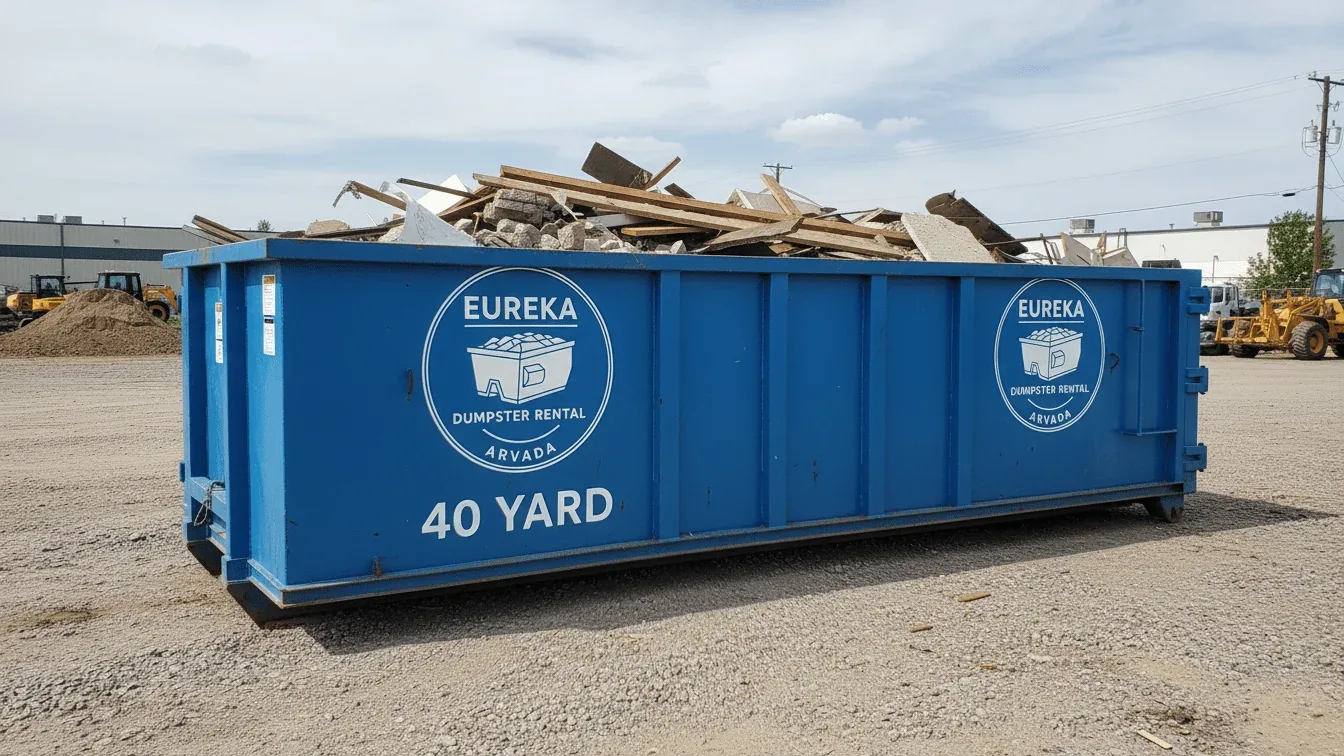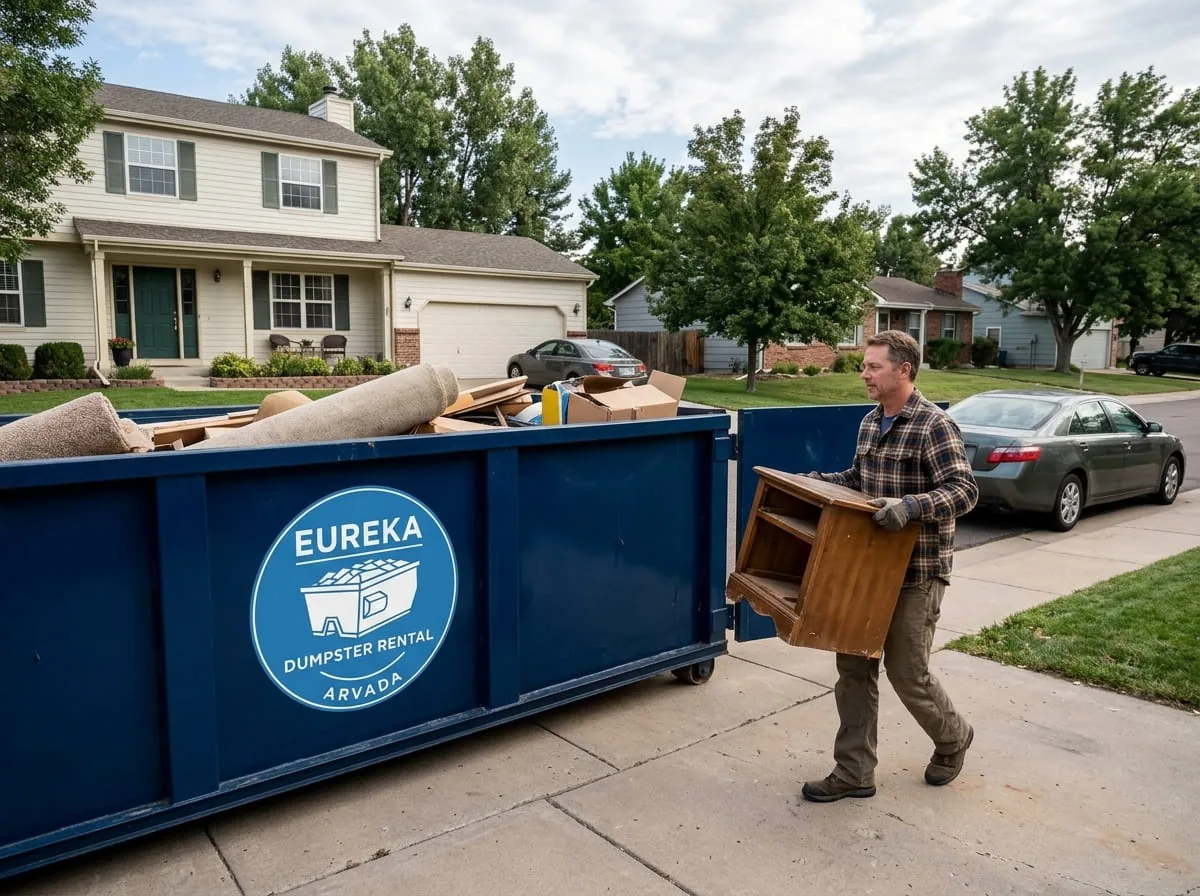
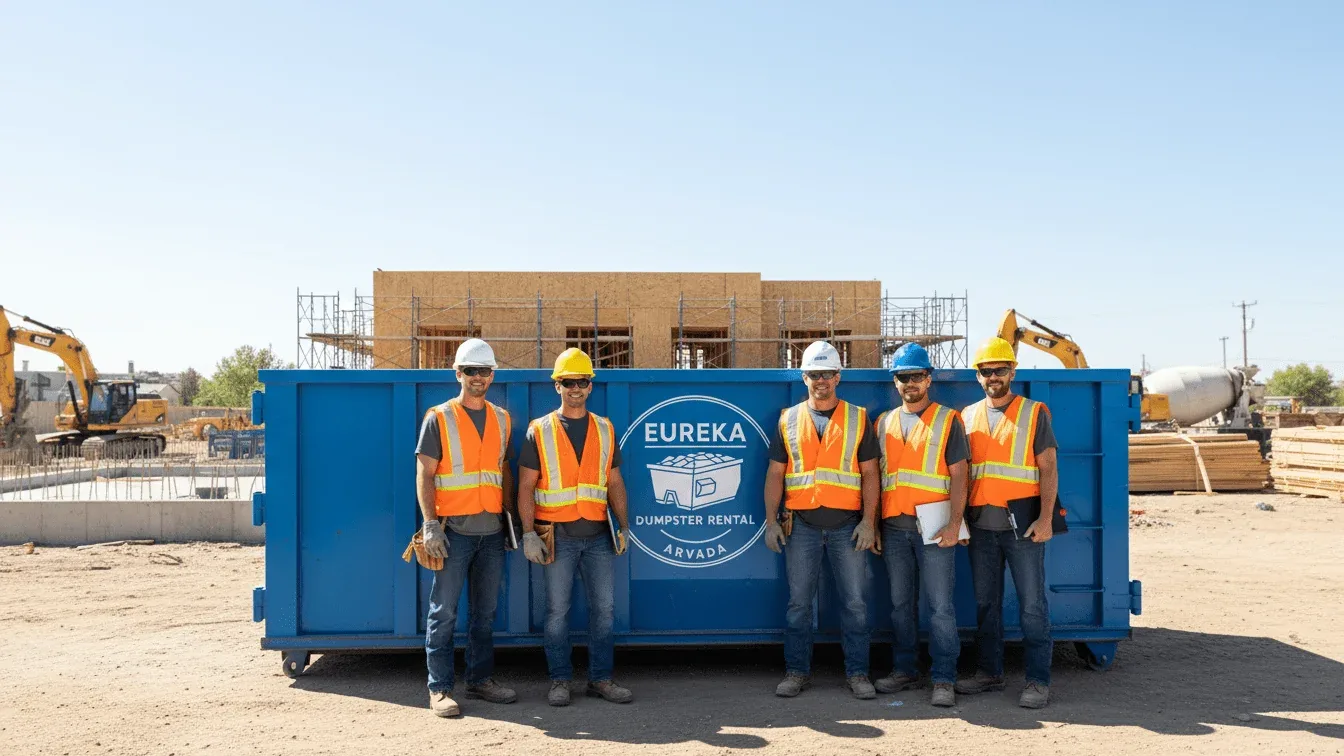
New Construction Dumpster Guide for Arvada Builders
How debris changes across a new-home build in west Arvada's growing subdivisions, and how to size, schedule, and place a construction dumpster to match each phase.
ReadStorm & Roofing guide
Colorado sits inside what meteorologists call Hail Alley, and Arvada roofs take their share of the damage almost every spring and summer. Here's how to size and schedule a dumpster for a hail-damage roof tear-off without over-ordering or falling behind your roofer.

If you have lived along Colorado's Front Range for more than a season or two, you already know the drill: a warm afternoon turns green-gray, the sky drops fast-moving cells off the foothills, and twenty minutes later your driveway is covered in ice and your roof looks like it lost a fight. Colorado sits inside a band that meteorologists and insurers have nicknamed Hail Alley, a corridor running roughly from the Texas Panhandle up through Nebraska and eastern Colorado where the atmosphere is unusually good at building large, damaging hailstones. Denver and its western suburbs, including Arvada, Wheat Ridge, Golden, and Westminster, sit close enough to that corridor's western edge that a severe hail event most years is closer to a certainty than a risk. For roofing contractors and homeowners across the Denver metro, that means hail-damage roof tear-offs are not a rare project. They are a predictable, seasonal surge that shows up every spring and summer and keeps dumpster yards busy for months at a stretch.
This guide walks through what actually happens debris-wise during a hail-damage roof replacement, how to pick a dumpster size that matches a typical Arvada roof without paying for capacity you will not use, and how to time delivery so the container lands on your driveway exactly when the tear-off crew needs it, not two weeks early taking up space or two days late holding up the job.
The physics behind Colorado hail comes down to elevation and atmospheric instability. Storms along the Front Range build in strong updrafts that keep hailstones suspended long enough to grow large before gravity wins, and the terrain funneling off the foothills tends to organize storm cells right over the populated corridor that includes Arvada, Golden, Lakewood, and the rest of the west Denver suburbs. The result is that a single severe storm can leave a swath of damaged roofs stretching across several communities in one pass, which is exactly why roofing crews and dumpster companies both see the same late-spring-through-summer rush every year. If your roof took a hit, there is a very good chance your neighbors' roofs did too, and that matters for how far ahead you should plan.
Homeowners are frequently surprised by how heavy roofing debris is. A full tear-off is not bulky and light like a garage cleanout; it is dense and concentrated. Asphalt shingles alone typically run somewhere in the neighborhood of 200 to 300 pounds per roofing square (a 10 foot by 10 foot section), and a tear-off usually also pulls off old underlayment, felt paper, and sometimes a layer of older shingles installed under the current layer. Add in any damaged flashing, vent boots, and the occasional sheet of decking that needs replacing after a hard hit, and even a modest single-story ranch can generate several tons of debris in a single day's work.
Because roofing debris is so dense, the right dumpster for a tear-off is usually sized around weight capacity more than sheer volume. A 20-yard dumpster, which comes with roughly 3 to 4 tons included, is a reasonable starting point for an average single-story roof in the 20 to 25 square range. Larger homes, steeper pitches that generate more waste per square, or a tear-off that includes two layers of old shingles tend to push toward a 30-yard dumpster, which carries roughly 4 to 5 tons included and gives the crew room to work without hovering near the weight limit. For a large or multi-layer roof, or when a roofing crew is tearing off more than one structure on the same property (house plus a detached garage, for example), talk through the square footage with your hauler before the container shows up. Guessing too small on a hail tear-off is the single most common sizing mistake, because it is the tonnage, not the visual pile, that fills the container first.
One of the more expensive mistakes homeowners make after a hail storm is ordering a dumpster before the job is actually ready to start. It feels productive to get the container on-site right after the storm, but if your adjuster has not yet inspected the roof, or your contractor has not locked in a tear-off date, that dumpster can sit on your driveway for a week or more racking up rental days while nothing happens.
The better sequence is straightforward. First, get the insurance adjuster out to inspect and approve the claim, or at minimum have your roofing contractor's own documentation of the damage in hand. Second, confirm a firm start date with the roofing crew, since they are the ones who will actually fill the dumpster. Third, schedule delivery to land the day before or the morning of tear-off, not a week ahead of it. This keeps rental days working for you instead of sitting empty, and it also means you are not blocking your driveway or a right-of-way spot longer than necessary. If your contractor is coordinating the dumpster order as part of the job, confirm with them directly what size and delivery date they have requested so nothing falls through the cracks between you, the roofer, and the hauler.
Because hail season hits the entire metro at roughly the same time, dumpster availability tightens fast in the weeks after a significant storm. Roofing crews across Arvada, Wheat Ridge, Westminster, Golden, and the surrounding cities are often booking tear-offs back to back, and every one of those jobs needs a container. If your neighborhood took a direct hit, assume that everyone on your block with storm damage is calling roofers and dumpster companies in roughly the same window you are.
The practical takeaway: once your contractor gives you a start date, get the dumpster reserved right away rather than waiting until the week of the job. Confirm the delivery window, the exact placement spot (driveway versus street), and how many rental days are included so there are no surprises if the tear-off runs a day longer than planned. During the height of storm season, a little lead time is the difference between the dumpster showing up on schedule and a job sitting half-torn-off while everyone waits on a container.
A hail-damage roof tear-off dumpster is meant for the roofing system itself: torn-off asphalt or architectural shingles, old underlayment and felt paper, damaged flashing, vent boots, ridge caps, and small amounts of rotten or storm-damaged decking your roofer swaps out along the way. That combination covers the overwhelming majority of what comes off a typical residential roof.
What should not go in with it is anything hazardous. Older homes, particularly those built before 1980, sometimes have roofing or building materials that contain asbestos, and Colorado's Department of Public Health and Environment regulates how those materials must be identified, handled, and disposed of. If your home is older and your contractor has any reason to suspect asbestos-containing materials in the roofing system, that is a conversation to have before tear-off starts, not something to guess about once debris is already in the container. The EPA's guidance on disaster and demolition debris is a useful reference point for how asbestos-containing roofing products need to be segregated and handled separately from ordinary construction debris. Beyond asbestos, keep paint, solvents, propane tanks, and other hazardous materials out of a standard roofing dumpster; those require separate disposal regardless of what triggered the job.
Most Arvada driveways can host a roofing dumpster with no permit at all, since the City of Arvada does not require one for a container placed entirely on private property. If your driveway is too tight and the dumpster needs to sit in the street or an alley instead, a right-of-way permit is required, and it has to be pulled by the container company through the city's online permitting system. During a heavy storm season when a lot of roofs on the same street are being replaced at once, curb space can get genuinely crowded, so it is worth confirming placement with your hauler before delivery day rather than discovering there is nowhere left to put it. Full detail on Arvada's placement rules, including required clearance from corners and driveways, is on the City of Arvada's dumpster permit page.
Many roofing companies in the Denver metro coordinate dumpster delivery directly as part of a hail tear-off job, and that is often the simplest path since they know exactly how much debris their crew generates and how many days the tear-off and reroof will take. If you are handling the dumpster yourself instead, loop your roofer in on the delivery date and placement spot so the container is exactly where the crew needs it when they start pulling shingles. Our roofing dumpster rental service is built around this exact workflow, and if the storm did broader damage to fencing, siding, gutters, or downed limbs on top of the roof, our storm debris removal service covers cleanup beyond just the roofing tear-off. Either way, calling ahead of your scheduled tear-off date is the single best thing you can do to keep the job moving.
Hail season in the Denver metro is predictable in its unpredictability: some year it hits hard, and when it does, roofing crews and dumpster availability both get tight fast. Whether you are a homeowner working through an insurance claim or a contractor lining up back-to-back tear-offs across Arvada, Wheat Ridge, and the surrounding cities, get in touch early. Contact Eureka Dumpster Rental at (720) 627-6880 to confirm sizing and lock in a delivery date that matches your tear-off schedule.
Talk to a real person
Call (720) 627-6880 and describe the job. Flat price, stated tonnage allowance, and a delivery window on the same call.
Mon–Sat 7:00am – 7:00pm · Sun by appointment
From this guide
For a typical single-story roof in the 20 to 25 square range, a 20-yard dumpster with roughly 3 to 4 tons included is usually enough. Larger homes, steeper roofs, or tear-offs pulling two layers of old shingles often need a 30-yard dumpster with roughly 4 to 5 tons included. Because shingles are heavy, weight capacity matters more than the visual size of the container, so it is worth telling your hauler the roof's square footage and layer count before you order.
Wait until your insurance adjuster has inspected the damage or your contractor has confirmed a firm tear-off date. Ordering the dumpster too early means it can sit empty on your driveway for days while the claim and scheduling get sorted out, which adds rental days without adding any progress. Time delivery to land the day before or the morning of the actual tear-off.
As soon as your roofing contractor confirms a start date, reserve the dumpster right away. After a significant hail event, roofing crews across the whole Denver metro tend to book tear-offs in the same window, and dumpster availability tightens quickly. Booking a week or more ahead of your scheduled tear-off date gives you a much better shot at the size and delivery window you need.
Yes. Torn-off asphalt or architectural shingles, old underlayment and felt paper, damaged flashing, vent boots, ridge caps, and small amounts of rotten decking are all standard contents for a roofing tear-off dumpster. That is what these containers are built for.
Keep hazardous materials out, including paint, solvents, and propane tanks. If your home was built before 1980, ask your contractor whether the roofing materials could contain asbestos before tear-off begins, since asbestos-containing debris has to be identified and handled separately rather than mixed into a standard dumpster load.
No. The City of Arvada does not require a permit for a dumpster placed entirely on private property, such as a driveway or garage pad. A right-of-way permit is only required if the container needs to sit in the street, an alley, or a city easement, and in that case the container company applies for it through the city's online permitting system.
Many roofing contractors coordinate dumpster delivery directly since they know exactly how much debris their crew will generate and how long the job will take. If you are ordering it yourself instead, confirm the delivery date and placement spot with your roofer ahead of time so the container is on-site and positioned correctly before the crew starts pulling shingles.
Keep reading
How debris changes across a new-home build in west Arvada's growing subdivisions, and how to size, schedule, and place a construction dumpster to match each phase.
ReadBefore demolition debris from an older Front Range home goes in a roll-off, it pays to know which materials and building eras can raise an asbestos flag - and what the process looks like if testing is warranted.
ReadClearing out a parent's home or downsizing for assisted living is exhausting in ways that have nothing to do with the boxes. Here is a calm, step-by-step way to sort what stays, what goes to donation, and what belongs in a dumpster.
Read