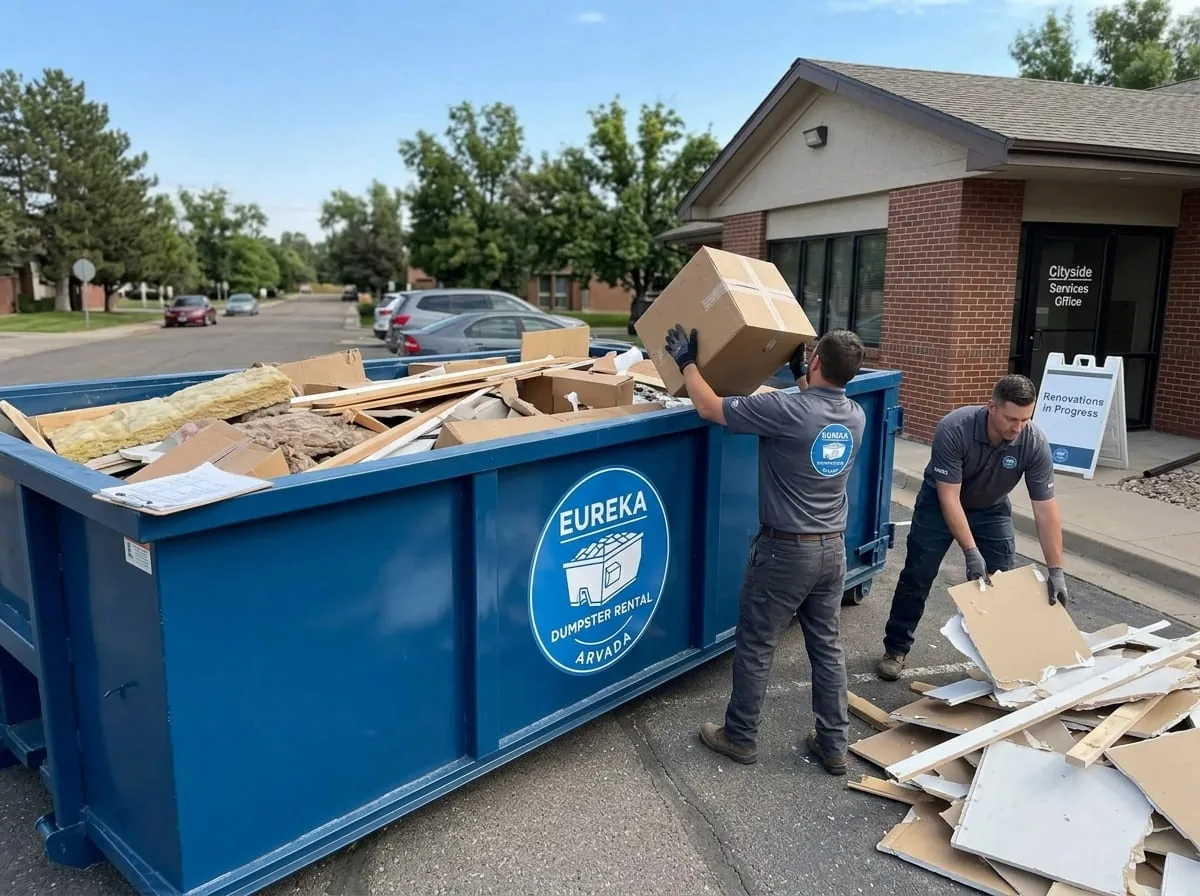
Picking a dumpster size is the single decision that determines whether a project goes smoothly or turns into a second delivery you did not budget for. Order too small and you end up paying for an extra pull, or worse, stacking debris above the fill line, which most haulers will not transport for safety reasons. Order too large and you are paying for space and weight allowance you never use, while a container that did not need to be that big sits on your driveway longer than it should. This guide walks through all five roll-off sizes we deliver around Arvada and the greater Denver metro area, using the exact dimensions, pickup-truck-load equivalents, and included tonnage for each size, so you can match a container to your project with confidence before you call.
Every dumpster on this page is the same width, 7.5 feet, which is standard for roll-off containers and generally fits within a normal residential driveway. What changes as you move up in size is the length and, more importantly, the height of the walls. That height difference matters more than most people expect, because it changes not just how much a container holds but how easy it is to load heavy or bulky material over the side wall by hand.
Dumpster Size Comparison Table
Here is how the five sizes stack up side by side. Pickup-truck-load figures are an approximate way to visualize volume if you have ever hauled debris in a full-size pickup bed, and the tonnage figures are the weight allowance included with the rental before any overage applies.
10 Yard Dumpster
The 10 yard dumpster is our smallest container, measuring about 14 feet long, 7.5 feet wide, and 3.5 feet high, with roughly 1 to 2 tons of included tonnage. It holds about what 3 to 4 full pickup truck loads would carry. Because the wall height is only 3.5 feet, it is easy to toss debris over the side by hand without a ramp or ladder, which is a real advantage on smaller jobs. This size is a good match for a single-room cleanout, a small bathroom remodel where you are pulling out a tub, vanity, and tile, or a garage cleanout where the volume is mostly boxes, old furniture, and miscellaneous junk rather than dense construction debris.
15 Yard Dumpster
The 15 yard dumpster steps up to about 16 feet long, 7.5 feet wide, and 4.5 feet high, with 2 to 3 tons included, or the equivalent of 4 to 5 pickup truck loads. This is a middle-ground size for homeowners who are not sure whether a 10 yard will be enough but know a 20 yard is more room than they need. It works well for a slightly larger bathroom or laundry room remodel, a garage or basement cleanout with more volume than a single 10 yard can absorb, or a mixed load of yard waste and household junk from a moving cleanout.
20 Yard Dumpster
The 20 yard dumpster is our most frequently rented size for a reason: at about 22 feet long, 7.5 feet wide, and 4.5 feet high with 3 to 4 tons included, it comfortably handles the debris volume from a full kitchen remodel, a roofing tear-off on an average single-family home, or a large whole-property cleanout. It holds the equivalent of 6 to 8 pickup truck loads. If you are re-roofing after a Front Range hailstorm, replacing cabinets and countertops, or clearing out a property with a full garage, basement, and attic worth of material, the 20 yard is usually the right starting point.
30 Yard Dumpster
The 30 yard dumpster keeps the same 22 foot length and 7.5 foot width as the 20 yard but grows to 6 feet of wall height, giving it 4 to 5 tons of included capacity and room for about 9 pickup truck loads worth of material. The added height rather than added footprint is what makes this size work for bulkier, higher-volume jobs: new home construction debris, a major whole-house renovation touching multiple rooms, or a whole-house cleanout where every room is being emptied at once, including furniture and appliances. Because the walls are taller, loading heavier items over the side by hand gets harder, so this size is best suited to jobs where debris is being loaded by machine, chute, or in bulk rather than piece by piece.
40 Yard Dumpster
The 40 yard dumpster is our largest container, sharing the same 22 foot by 7.5 foot footprint as the 20 and 30 yard sizes but reaching a full 8 feet of wall height, with 5 to 6 tons included and room for roughly 12 to 16 pickup truck loads. This size is built for large commercial projects and major demolition jobs where volume is high and debris is being loaded mechanically. At 8 feet tall, hand-loading over the side is impractical for most homeowners, so this size is rarely the right call for a residential cleanout, but it is exactly right for a commercial buildout, a large structure teardown, or a construction site generating a steady stream of debris.
Understanding Tonnage Allowances and Overage
Every dumpster rental includes a set weight allowance, shown in the tons-included column above, and that allowance is built into the base price. The concept is simple: a 20 yard dumpster full of light material like drywall scraps and cardboard might weigh well under its 3 to 4 ton allowance, while the same 20 yard container filled with wet shingles, concrete chunks, or soil can hit that weight limit long before the container looks full by volume. Heavy debris types like roofing shingles, tile, brick, concrete, and dirt are dense, so they push a container toward its tonnage limit faster than bulky-but-light debris like furniture or yard waste. If a load comes in over the included tonnage, an overage charge applies for the extra weight, which is why it is worth telling us up front what kind of material you are disposing of. We can steer you toward a size that has enough weight allowance for the job, rather than one that only looks right based on volume. If you are not sure how a specific material is likely to weigh out, give us a call and describe the project; that is the fastest way to avoid a surprise on pickup day.
Driveway and Placement Considerations by Size
All five sizes share the same 7.5 foot width, so if a container fits on your driveway at all, width is rarely the limiting factor. Length and clearance are what change the calculation. The 10 and 15 yard containers, at 14 and 16 feet respectively, fit comfortably on most standard residential driveways with room to spare on either end. The 20, 30, and 40 yard containers all share the same 22 foot length, so once you can accommodate a 20 yard on your property, a 30 or 40 yard will take up the same footprint on the ground, just with taller walls. What does change with height is loading access: a 30 or 40 yard container's tall sides make it a poor fit for a driveway spot where you are hand-loading over the edge, so those sizes work best on flatter, more open areas of a property where a loader, chute, or ramp can be used, or where debris is simply being thrown down from an upper level of demolition work.
If your driveway or yard cannot accommodate the container, the alternative is placing it in the public right-of-way, such as the street in front of your home. In the City of Arvada, no permit is required for a dumpster placed entirely on private property, but a right-of-way permit is required for any container placed in the street, alley, or a city easement, and the maximum size allowed in the right-of-way is 40 yards. Right-of-way placement also comes with rules around distance from corners and driveways and keeping fire hydrants and storm drains clear. We handle these placement questions on a case-by-case basis for every delivery, so if your property has tight access, a slope, or overhead wires to work around, mention it when you call and we will recommend the size and placement that actually works for your lot.
How to Choose the Right Size
As a general rule of thumb: a small bathroom remodel or a garage cleanout fits comfortably in a 10 or 15 yard container. A kitchen remodel, a roofing job on an average-size house, or a large single-property cleanout is usually a 20 yard. New construction, a major whole-home renovation, or a full whole-house cleanout typically calls for a 30 yard. Large commercial projects and major demolition work are where the 40 yard earns its size. If your project sits between two categories, or you are mixing debris types like old roofing plus a kitchen remodel in the same cleanup, it is worth a quick call rather than guessing. We deliver all five sizes throughout Arvada and the surrounding Denver metro area, and we would rather talk through the specifics of your job for two minutes on the phone than have you order the wrong size and need a second container. You can see the full lineup on our dumpster sizes page, or contact us directly and we will help you land on the right fit before it ever shows up in your driveway.