There is a particular kind of tired that comes from clearing out a family home. It is not just the physical work of moving furniture and hauling boxes, although that alone can wear out a whole weekend and a few sore backs. It is the weight of every drawer, every closet, every stack of mail that turns into a decision about someone's life. Families in Arvada, Wheat Ridge, Golden, and across the Denver metro go through this constantly, whether the trigger is a death in the family, a parent moving into assisted living, or simply the long-overdue work of downsizing a house that has accumulated forty years of belongings. There is no way to make an estate cleanout painless, but there is a way to make it manageable.
This guide is written for the family member who has been handed the job, often the adult child who lives closest or who happens to have a free week. It walks through a sorting approach that keeps decisions simple, explains what should leave the house before anything goes to a dumpster, describes what actually belongs in a dumpster, and offers a realistic sense of timing so the process does not stretch on for months or get rushed into a single miserable weekend.
Give Yourself Permission to Go Slowly, But Not Too Slowly
Most people approach an estate cleanout in one of two ways. Either they try to do it all in one exhausting push, or they let it linger for a year because every object feels like it needs a decision they are not ready to make. Both approaches cause problems. Rushing leads to regret, donated or discarded items that turn out to matter, and family friction when someone feels their input was skipped. Dragging it out means paying to maintain an empty house, or leaving a surviving parent's new apartment full of boxes they never unpack. The healthier middle path is to set a realistic window, often two to four weekends for an average single-family home, and to treat the first pass as sorting rather than deciding. You are not deciding the fate of every item on day one. You are putting it into a category, and the categories do the deciding for you later.
A Sorting Approach That Actually Works: Keep, Donate, Sell, Dispose
The simplest system is also the most effective one: four categories, four physical zones in the house or garage, and every item gets sorted into one of them before anyone worries about logistics.
Keep is for anything with real sentimental or practical value to a family member: photographs, jewelry, a few pieces of furniture people actually want, important documents, and anything that needs to be handled with legal or financial care (wills, deeds, financial statements, insurance policies). Pull these items out first, before the emotional fatigue of sorting sets in and makes everything start to look the same.
Donate is for anything in usable condition that the family does not want to keep: clothing, kitchenware, books, working small appliances, furniture without major damage, linens, and toys. This is usually the largest category by volume in a full house, and it deserves its own section below because donating before the dumpster arrives saves money and does real good.
Sell is for higher-value items worth the effort of a listing or an estate sale company: quality furniture, tools, collectibles, antiques, or anything a local estate-sale service thinks is worth including in a sale. Not every family wants to deal with selling, and that is a reasonable choice too, but it is worth a quick look before assuming everything is either donation or trash.
Dispose is the smallest category in a well-run sort, but it is the one this guide focuses on next, because it is the category that determines what size dumpster the family actually needs.
What to Do With Donatable Items Before the Dumpster Arrives
The single most common mistake in an estate cleanout is treating the dumpster as the default destination for anything the family does not want to keep. A dumpster is fast and it feels productive, but usable furniture, clothing, and household goods dropped into a dumpster are usable furniture, clothing, and household goods sent straight to a landfill. Sorting the donate pile out first, before the dumpster shows up, both reduces the size of container the family needs and keeps good items in circulation for someone who can use them.
In the Arvada and Denver-metro area, Arc Thrift Store operates a location in Arvada that accepts furniture, clothing, housewares, and general household donations, and many locations will schedule a pickup for larger furniture loads, which is worth a phone call if the family is dealing with couches, dressers, or bed frames in good condition. Beyond Arc, most Denver-metro communities have Goodwill locations and smaller church or community thrift stores that accept the same general categories. A quick call to confirm current drop-off hours and any size restrictions before loading a truck saves a wasted trip. For anything the family is unsure about, most donation centers can say over the phone whether an item is accepted; when in doubt, it rarely hurts to ask before assuming something belongs in the trash pile.
Building in a day or two specifically for donation runs, separate from the day the dumpster arrives, tends to work better than trying to do both at once. It keeps the donate pile from getting mixed back into the dispose pile out of sheer exhaustion at the end of a long day.
What Actually Belongs in the Dumpster
Once the keep, donate, and sell piles are pulled out, what is left is the true junk: items too damaged, worn out, or outdated to be usable by anyone else. This typically includes broken or heavily worn furniture, old mattresses, water-damaged boxes and paperwork that is not worth keeping, stained or torn carpet pulled up during a pre-sale refresh, expired or damaged household goods, broken shelving and particleboard furniture that did not survive decades of use, old exercise equipment, and general debris left behind after decades of a household running. This is the pile that goes into the dumpster, and it is usually smaller than people expect once donation and sale items are properly pulled out first.
A few things do not belong in a standard dumpster and need separate handling: paint, chemicals, batteries, and other household hazardous waste; electronics in many jurisdictions; and in older homes built before the 1980s, any materials suspected of containing asbestos, such as certain popcorn ceiling textures or old floor tile adhesive, which should be evaluated before disturbing rather than tossed in with general debris. The Colorado Department of Public Health and Environment has guidance on asbestos for homeowners dealing with an older property, and it is worth a look before any demolition-style work begins on a pre-1980s Arvada home.
Right-Sizing the Dumpster for a Full-House Cleanout
Estate cleanouts almost always produce more debris than people expect, because a lifetime of belongings adds up even after donation and sale piles are removed. For a typical single-family home with a garage and basement or attic storage, a 20-yard dumpster is the common starting point, holding roughly six to eight pickup truck loads and three to four tons. For larger homes, homes with a lot of furniture headed for disposal rather than donation, or cleanouts that also involve pulling up carpet and clearing a garage full of decades of storage, a 30-yard dumpster is often the safer call, with room for nine pickup truck loads and four to five tons included.
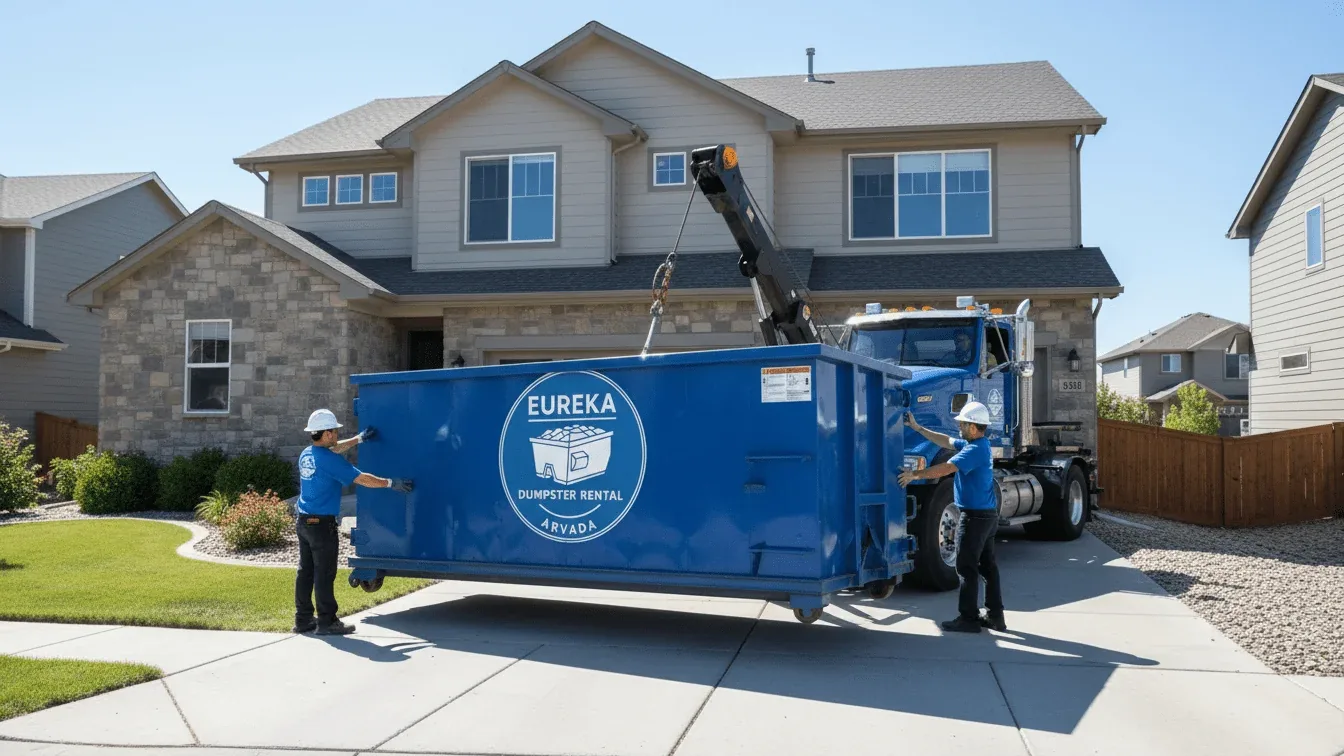
It is almost always better to size up than to guess too small and end up needing a second container mid-project, which adds cost and a second delivery to coordinate around a family that is already stretched thin. A quick call to Eureka Dumpster Rental with a rough description of the home's size and what is being cleared out is usually enough to land on the right size the first time; the full breakdown of dimensions and tonnage for every size is on the dumpster sizes page.
Pacing the Project Without Letting It Take Over Your Life
A workable rhythm for most families is to schedule the dumpster delivery for roughly the midpoint of the project, after the first pass of keep and donate sorting is done but before the family runs out of momentum. That way the dumpster is not sitting empty for a week while sorting happens around it, and it is not delivered on day one only to overflow before the real disposal pile has even been identified. Because Arvada allows a dumpster to sit on a driveway with no permit required at all, and permits for a right-of-way placement run 30 days with an extension available, most families have plenty of flexibility to keep the container on-site for the working weekends they need without worrying about a tight deadline.
You Do Not Have to Do This Alone
Clearing a family home is emotional work wrapped around physical work, and it is fair to want help with at least the physical half. Eureka Dumpster Rental's estate cleanout service is built specifically for families going through this in Arvada and across the Denver metro: straightforward drop-off and pickup, a size recommendation based on the actual home rather than a guess, and a team that understands this is not a construction job, it is somebody's home. When you are ready, or even just want to talk through timing and sizing before you have a firm date, contact us and we will help you plan it out.